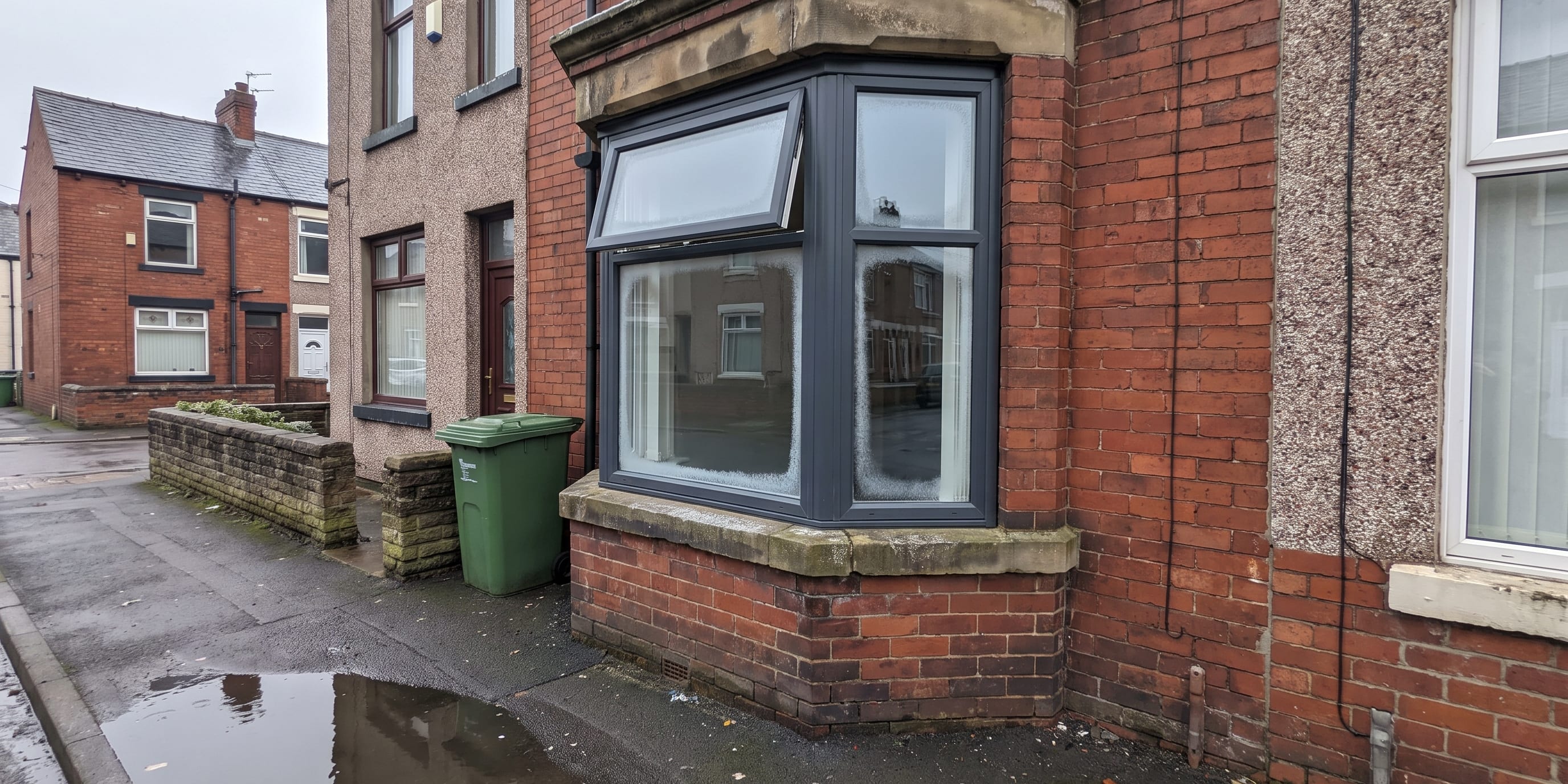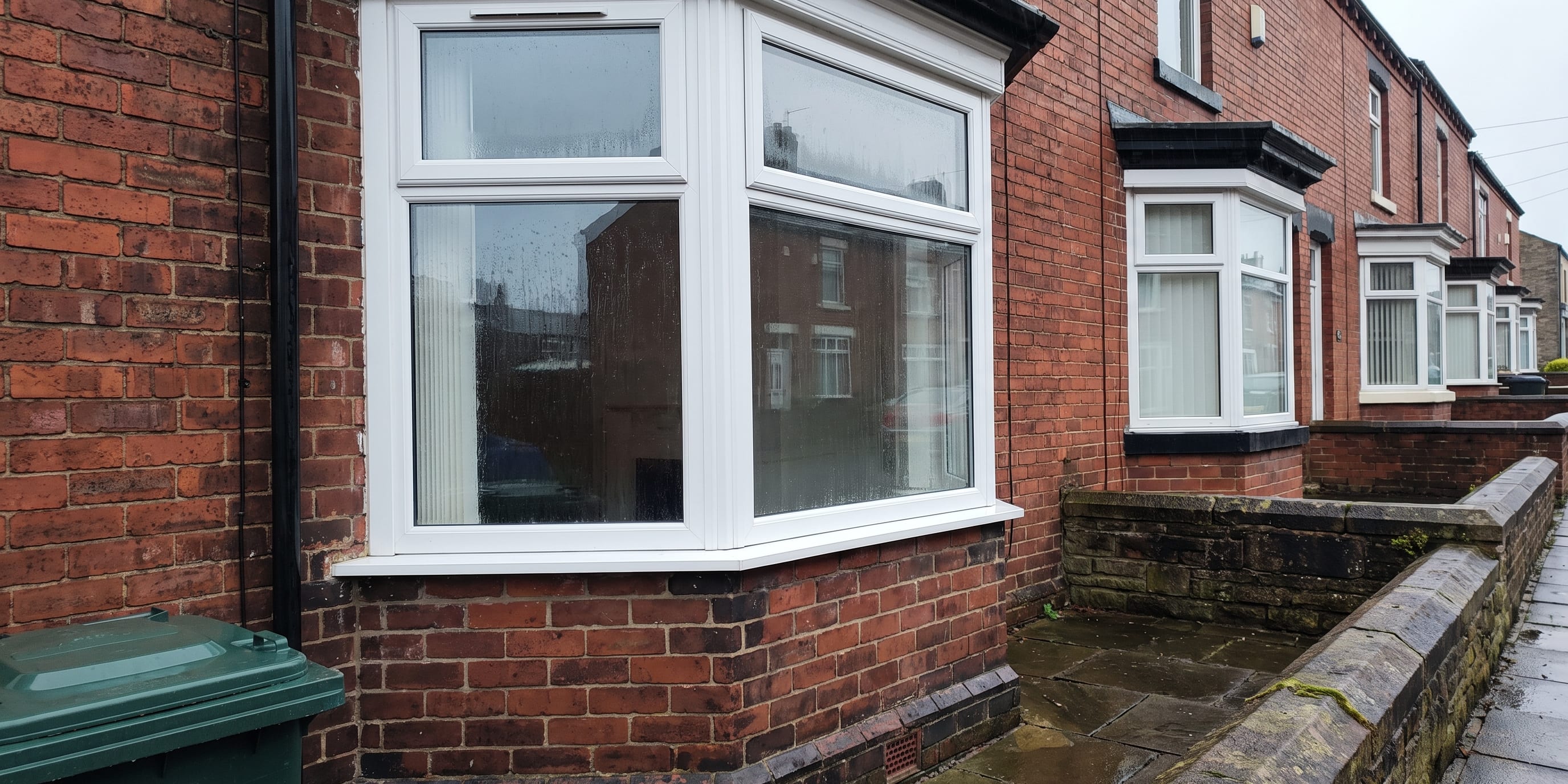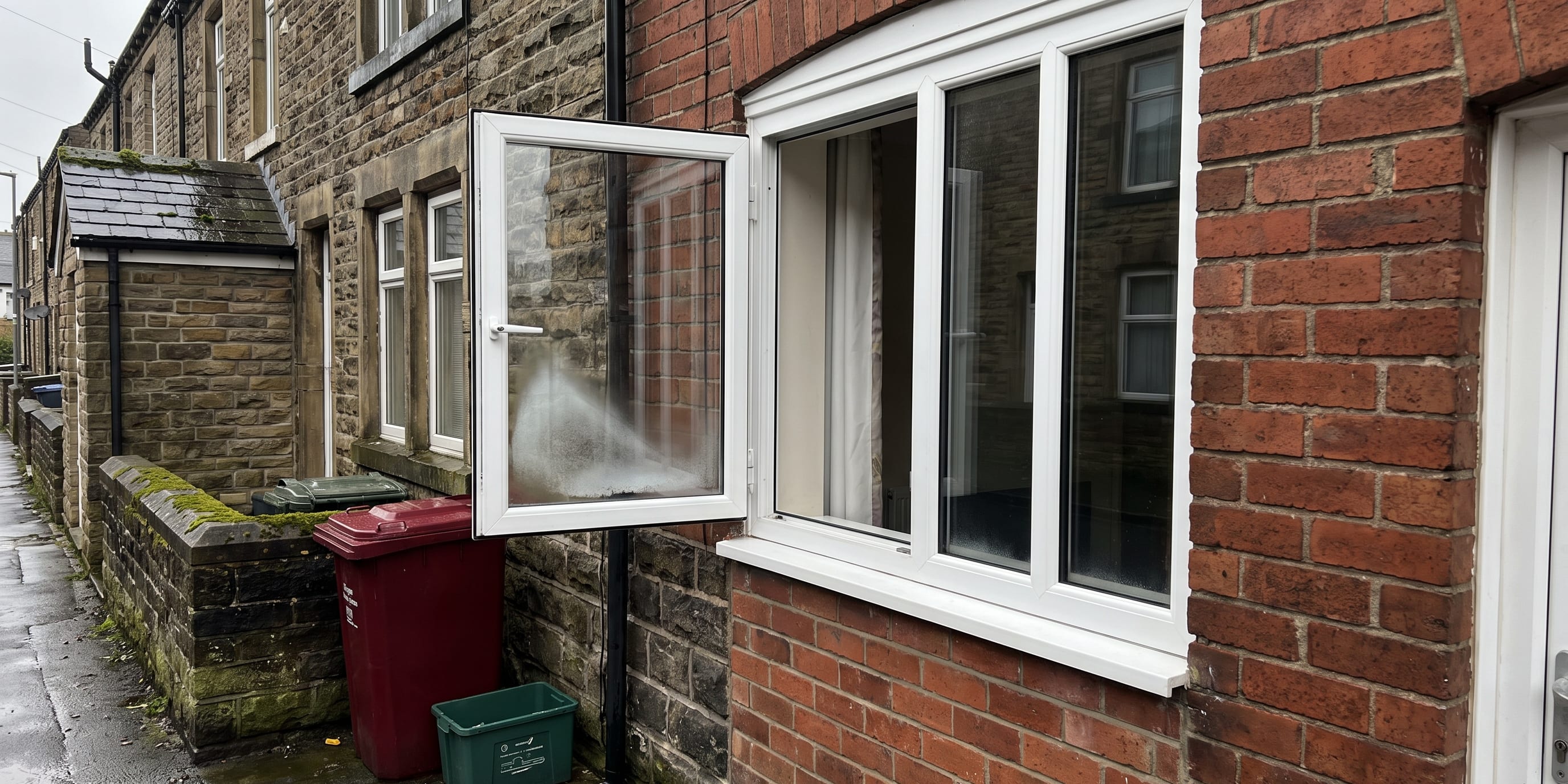
What Happens to Your Old Windows When We Replace Them
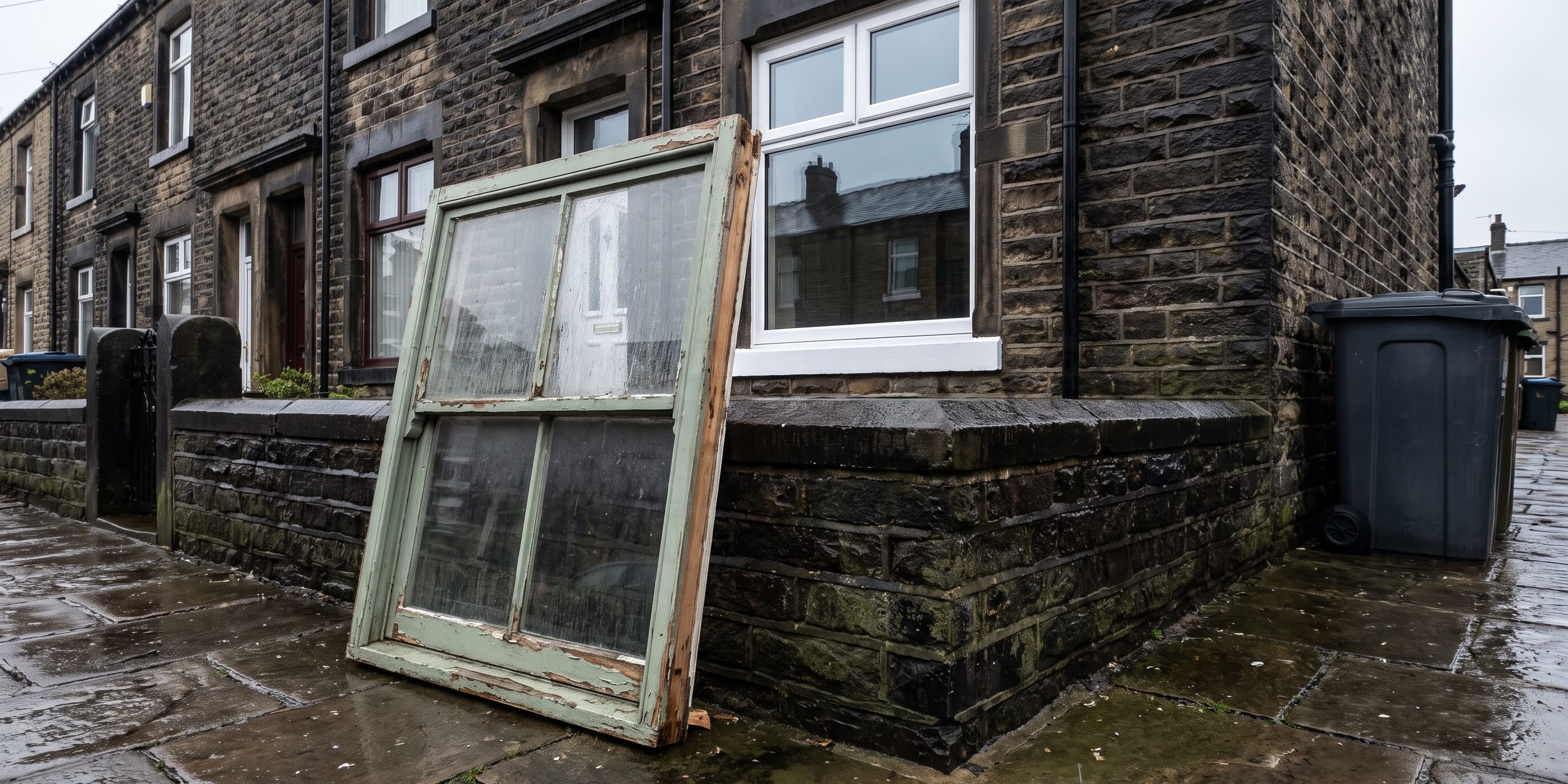
Ask most people what worries them about having windows replaced and you rarely hear anything about U-values. You hear about the mess. You hear about a skip blocking the drive for a fortnight. You hear about a surprise line on the final invoice for "disposal". And somewhere underneath all of that sits a quieter question: those old frames have been in the wall for twenty-odd years, so where do they actually end up?
This page answers that properly. Not a general explainer about the recycling industry, but what happens on the day when Win-Door Fit takes your old windows out, who is responsible for them, and what it costs you (nothing extra, but read on for why that matters).
The morning the old windows come out
Work starts room by room, not house-wide. That is a deliberate choice. Opening up every aperture in the property at once leaves you with a cold, open shell and a lot of exposed rooms. Taking one window out, fitting its replacement, and only then moving to the next means the house stays weathertight for almost the whole day.
Before anything is touched, the crew walks the job with you and confirms which windows are coming out, which way the new ones open, and where the van is going to sit. Then the first opening is prepared: dust sheets down, floor protected, anything still on the sill moved clear.
Removal itself is more controlled than people expect. The glazed units come out first wherever possible, because a frame without glass in it is lighter, safer and far less likely to cause damage on the way out. Beads are lifted, the sealed unit is taken out and carried straight to the van. Only then does the frame get cut free from the fixings and eased out of the opening.
That order matters. A frame yanked out with the glass still in it is heavy, unbalanced and one slip away from a cracked sill or a broken pane in a confined room. Taking it apart first is slower by a few minutes and considerably tidier.
Once the opening is clear, the reveal gets checked and cleaned back. Old sealant, old packers, crumbling mortar and any timber battening left from a previous installation all come away at this point. That debris goes into the van with everything else. The new frame then goes in, gets levelled, packed, fixed and sealed, and the crew moves on.
Removal and disposal are included in the price
Here is the part worth being blunt about. When Win-Door Fit gives you a written price, taking the old windows out, loading them and disposing of them responsibly is included in the price. There is no separate disposal fee, no skip hire for you to arrange, and no waste charge added at the end of the job.
This is not a promotional gesture. It is simply how a job should be quoted. Removing the old window is not an optional extra in a window replacement, it is half the work, and it belongs in the same number as the fitting.
What that means practically:
- You do not apply for a skip permit or lose your parking space to one.
- The old frames do not sit on the drive waiting for a collection.
- The final invoice matches the quote you agreed, assuming nothing hidden turns up behind the frame.
That last point deserves honesty. Occasionally a window comes out and reveals something nobody could see at survey: rotten timber sub-frame, a failed lintel bearing, damaged render. If that happens, the crew stops and tells you what has been found and what it means before continuing. It is discussed on the day, in front of you, with the opening there to look at. What it never does is appear as an unexplained figure at the bottom of the bill.
Protecting the house while it happens
Window replacement is a dusty trade. Twenty years of sealant, mortar dust and grime around a frame does not come out cleanly. The aim is not to pretend there is no mess, it is to contain it and clear it.
Dust sheets go down over floors and across furniture that cannot be moved. Carpet near the working area is covered, not just the patch directly under the window. Glass is handled deliberately: units are carried, not dragged, and taken out of the house promptly rather than stacked against a wall where someone can walk into them. If a unit is already cracked when the beads come off, which does happen with old failed glazing, it is wrapped before it moves anywhere.
At the end of each opening the immediate area is swept and the debris bagged or binned into the van. At the end of the day the rooms are cleared, sheets lifted and the sills wiped down. You should be able to put the curtains back up and use the room that evening.
There are a couple of things that genuinely help, and they cost you five minutes:
- Take ornaments, plants and blinds off the sills and away from the windows the night before.
- Pull furniture back roughly a metre from each window where you can.
- Keep pets in a closed room away from the work, because doors and windows are open through the day.
- Leave space for the van reasonably close to the house, since everything that comes out has to be carried to it.
Where the old uPVC frames go
An old uPVC window is not one material. It is a plastic profile, a steel reinforcement section running inside the main chambers, aluminium or steel hardware such as hinges, handles and locks, rubber gaskets, and glass. Sent to landfill as a single unit, all of that is wasted. Separated, most of it has somewhere useful to go.
uPVC is a recyclable material. Frames can be stripped of their metalwork, processed and reground so the material re-enters the supply chain rather than being buried. The steel reinforcement pulled out of the chambers is scrap metal, which has an established route of its own, as do the hinges and locking mechanisms.
What we will not do on this page is quote you tonnages, percentages or a named processing partner, because specific claims of that kind should come with specific evidence behind them. The honest statement is the useful one: the frames are taken off site by us, kept separate from general building rubble, and sent to be dealt with as recoverable material rather than tipped.
If your existing windows are timber or aluminium rather than uPVC, the principle is the same. The materials are separated and routed appropriately, with aluminium in particular being well worth recovering.
Where the old sealed glass units go
A sealed glass unit is trickier than a plain sheet of glass. It is two or more panes bonded to a spacer bar, with desiccant inside the spacer and a sealant perimeter holding the whole thing together. It cannot simply be thrown in with bottle glass.
For that reason each glass unit is kept whole and intact wherever possible on the way out of the house, rather than broken up in situ. Whole units are safer to carry, safer for you to have in the room and easier to handle further down the line, where the glass can be separated from the spacer and the sealant and processed as flat glass cullet.
Toughened and laminated panes behave differently again, laminated glass having an interlayer bonded between the panes. The practical consequence for you is straightforward: glass leaves the property in the van, it does not go in your household bin, and it is not left leaning against the garage wall for someone else to collect.
Why the same crew start to finish makes the difference
Plenty of window companies sell the job, then send a subcontracted fitting team, and sometimes a third party again for waste. That is where the gaps appear. The fitters say the office arranged collection. The office says the fitters take it. Meanwhile your old windows are stacked down the side of the house for a fortnight and nobody will own it.
Win-Door Fit works differently because the same crew quotes the job and fits it. The person who surveyed your windows knows exactly what is coming out, how many units, what they weigh and what it takes to get them into the van, because they will be the one doing it. Nothing is handed over between parties, so there is no gap for responsibility to fall through.
It also removes the incentive to leave things behind. A subcontractor paid per install has a reason to be gone by four o’clock. A local business whose name is on the van, and who wants the neighbour’s job next, does not.
Practically, it means one point of contact from the first visit to the final sweep up, one written price covering removal, fitting and disposal, and the same crew accountable for the state your house is left in.
If you are weighing up quotes and want to know exactly what is and is not included before you commit, it is worth reading how we price and fit replacement windows on the REHAU system, then getting in touch for a written quote that covers the old windows leaving as well as the new ones arriving.
Questions
Frequently Asked Questions
Do I have to pay extra to have my old windows taken away?
No. Removal, loading and disposal of the old frames and glass are included in the price we give you in writing at survey. You do not hire a skip and you do not get a separate disposal line on the invoice.
Will I need a skip outside the house?
For a normal domestic window replacement, no. The old frames and glass go straight into our van as they come out, so nothing sits on the drive or the pavement overnight.
Can old uPVC windows actually be recycled?
Yes. uPVC is a recyclable material, and the frames are separated from the glass, the steel reinforcement and the metal hardware so each part can go to the right stream rather than to landfill as one mixed unit.
How much mess does taking the old windows out make?
There is some dust and old sealant debris, which is why we put dust sheets down and clear up as we go. Most customers find the room usable again the same evening.
What if you find rot or damage behind the old frame?
We tell you before we go any further. Anything that changes the price is discussed with you on the day, not added quietly to the final bill.