New Windows or Just New Glass? A Fitter’s Checklist
Almost every article about window replacement makes the same quiet assumption: that the window is a single object, and if part of it has gone wrong the whole thing needs pulling out. That is not how a window is built, and it is not how a fitter looks at one.
A modern window is two systems bolted together. There is the sealed glass unit, which does the insulating, and there is the frame with its gaskets, beads, hinges and locking gear, which does the holding, sealing and moving. The two fail for different reasons and have very different fixes, one a fraction of the work of the other. So before you book anyone in, work out which side of that fork you are on. Most people can do it from inside their own house in ten minutes.
Two problems, two fixes
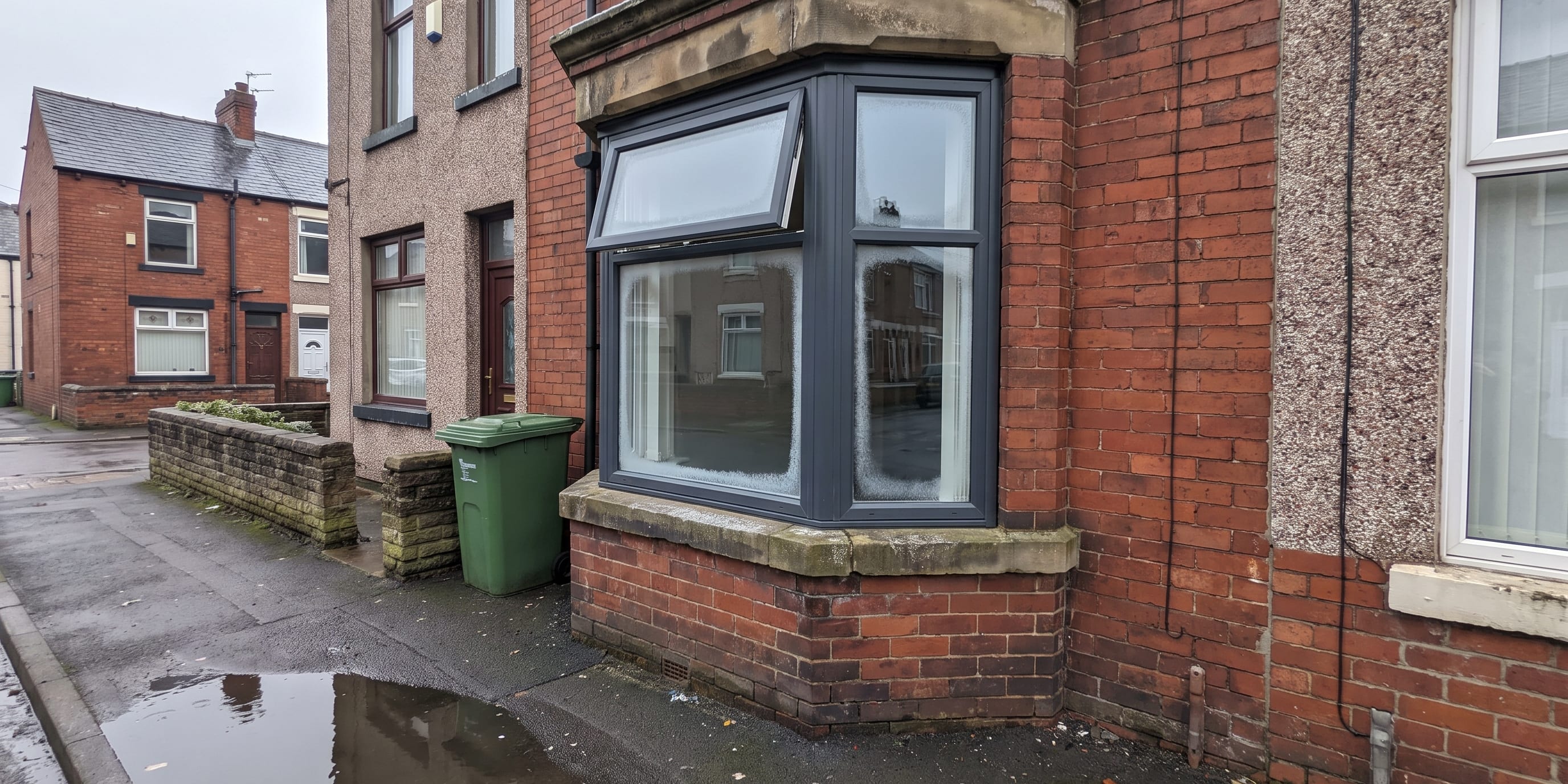
Problem one: the sealed unit has failed. The double glazed pane in your window is a factory sealed sandwich. Two sheets of glass, a spacer bar round the edge holding them apart, a desiccant inside that spacer to absorb trapped moisture, and a perimeter seal keeping the whole thing airtight. When that perimeter seal breaks down, damp air gets in, the desiccant saturates, and moisture starts condensing between the panes. The unit has stopped insulating properly and it will never recover.
The fix is to measure the aperture, make a new unit to match, take out the old one and bead the new one in. The frame stays where it is. In the trade this is usually called a double glazing upgrade or a sealed unit replacement, and it is why a lot of people braced for a full window replacement end up spending a good deal less.
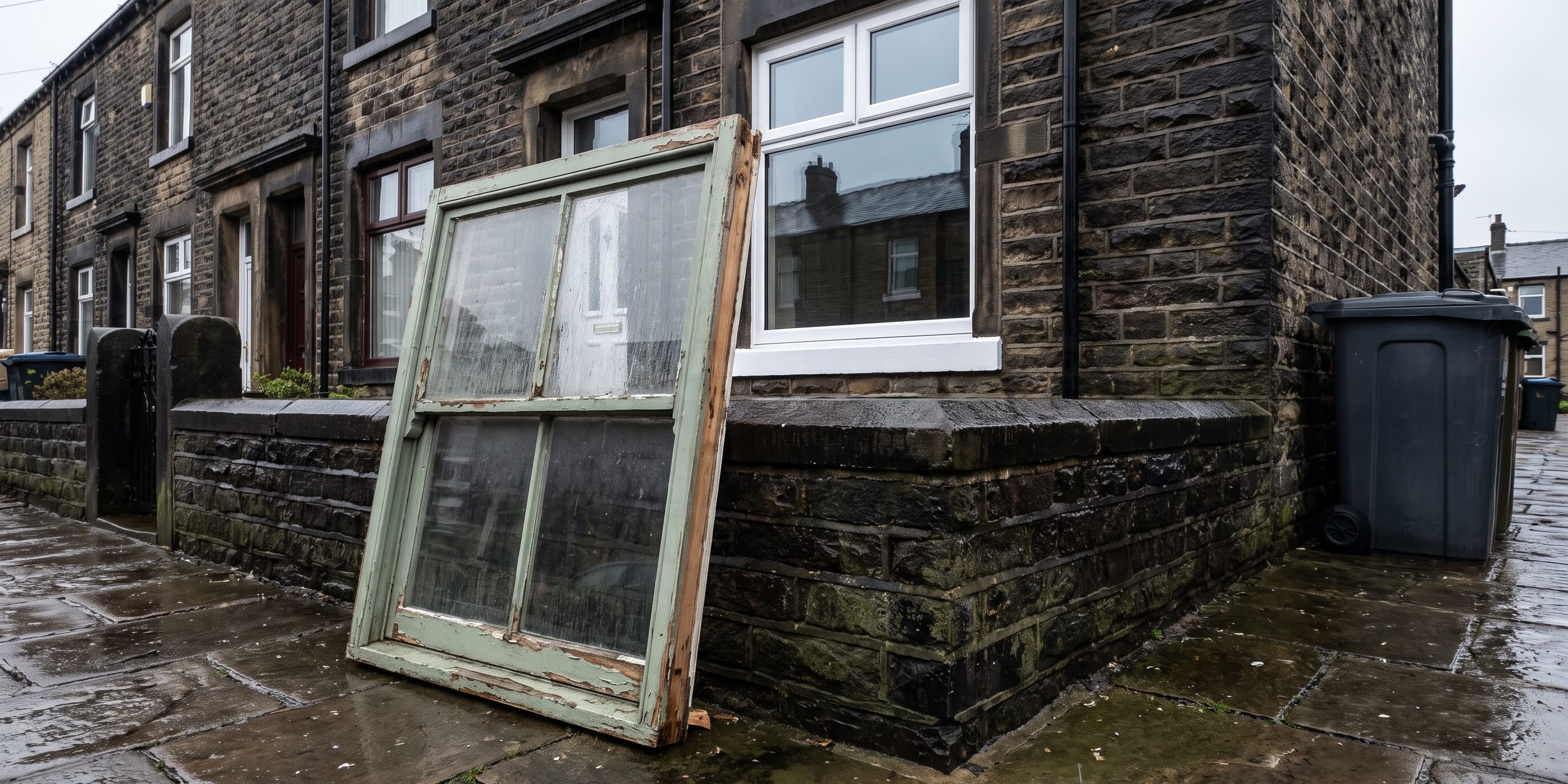
Problem two: the frame has failed. The frame carries the weight, keeps the wind and rain out, and lets the window open and shut. When it distorts, splits, or the hardware inside it gives up, no amount of new glass will help. A new sealed unit in a bowed frame will still draught, still stick, and can fail early because it is under stress in a frame that is no longer square.
The fix there is a new window. That is not an upsell, it is the honest answer to a different problem.
How to spot a failed glass unit
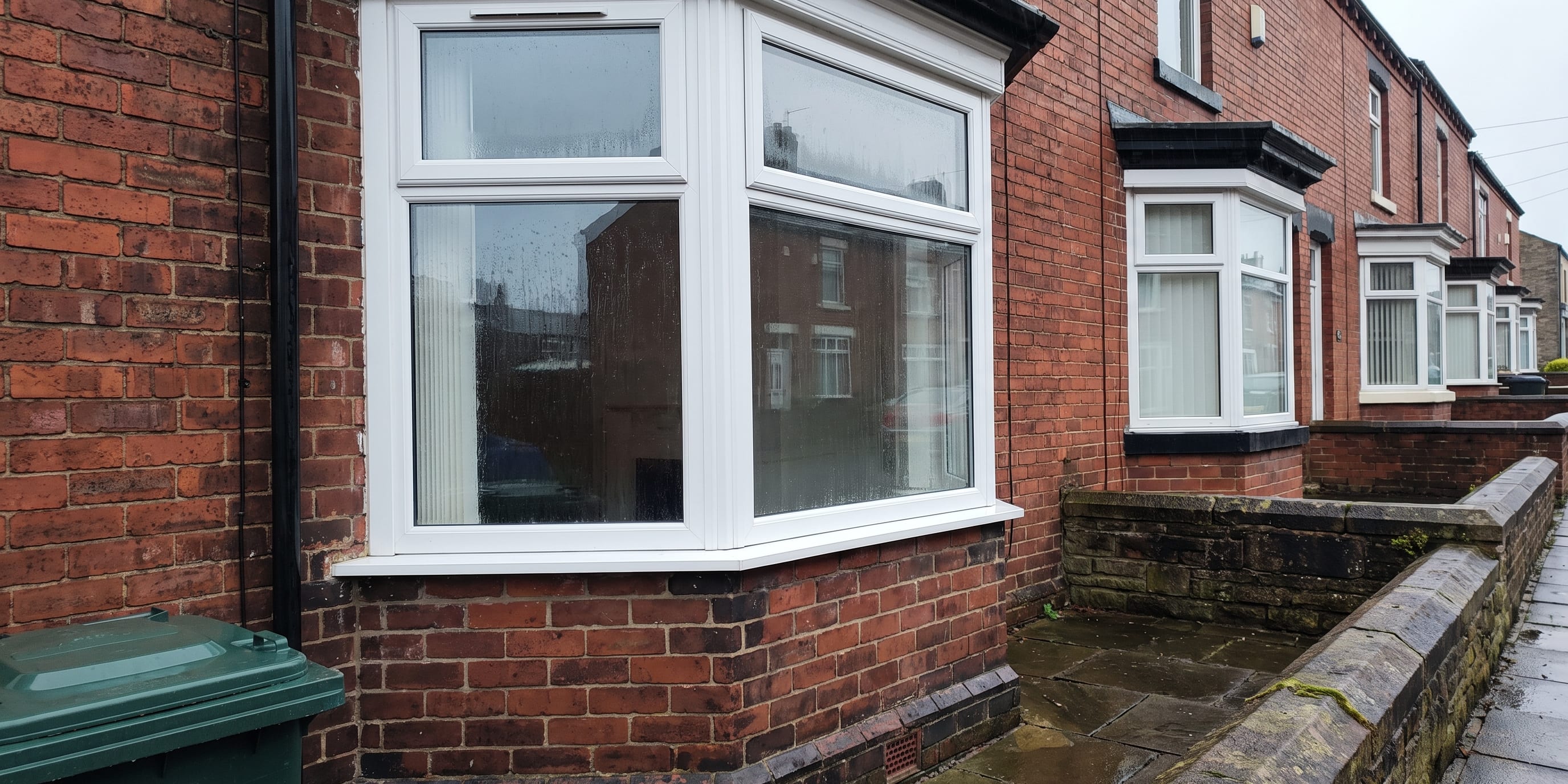
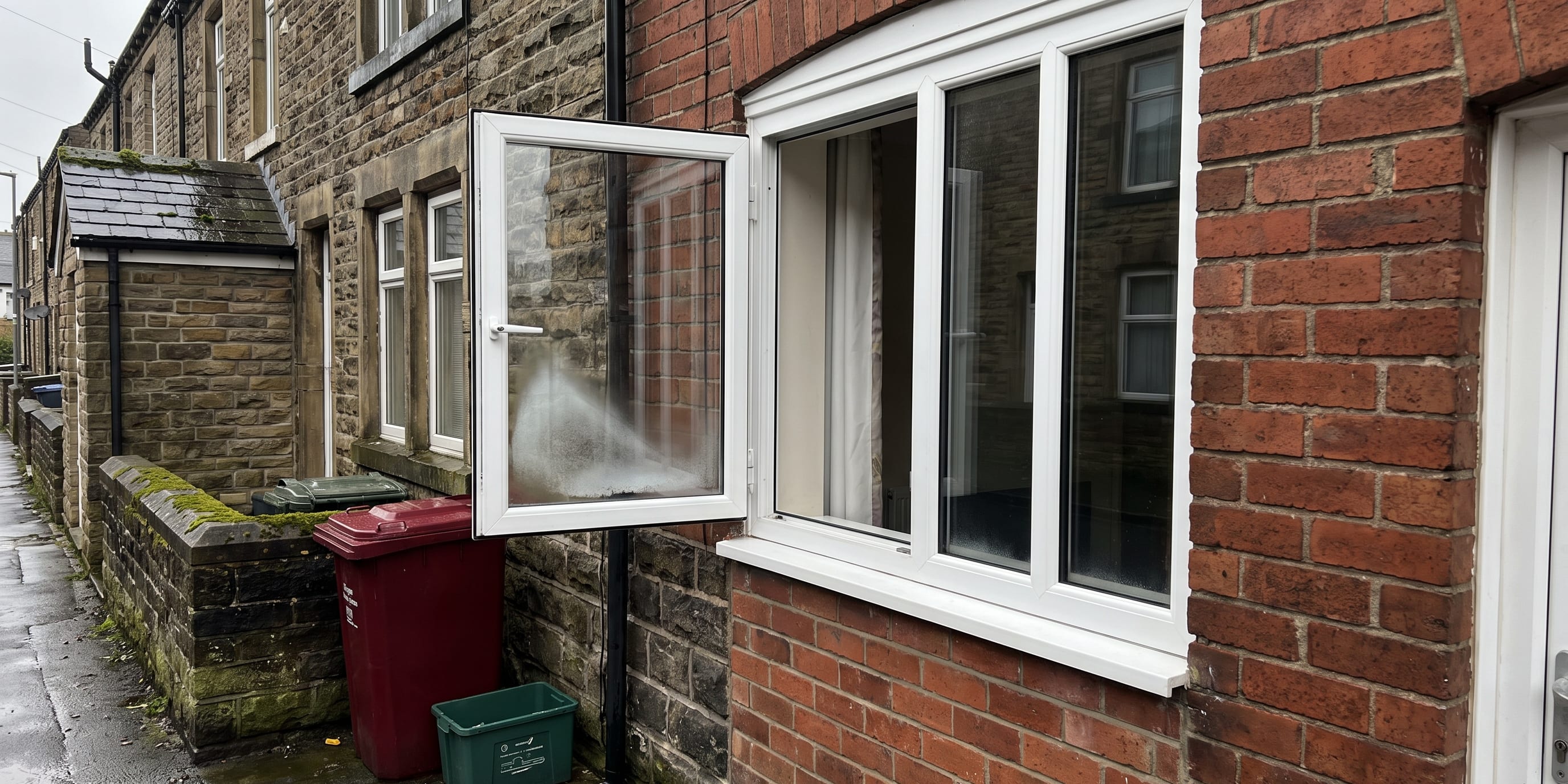
The signature of a failed sealed unit is misting or condensation between the panes. Not on the room side surface, not on the outside surface. Between them, where you cannot wipe it.
Test it with your hand. If you can rub the moisture away with a cloth, it is surface condensation and that is a humidity and ventilation issue in the room, not a fault with the glass. If the film sits there untouched while you wipe both faces, the seal has gone.
Other signs of unit failure are a permanent milky bloom that never fully clears even on a dry summer day, streaky tide marks inside the cavity left behind as moisture repeatedly condenses and dries, and one pane looking stubbornly dirty because the grime is on a face you cannot reach.
Here is the part most articles skip. A failed unit tells you nothing about the condition of the frame. Sealed units fail because a manufactured seal has broken down, because poor drainage has allowed water to sit against the unit edge, or simply through age and thermal cycling. A frame in good order can easily outlast two generations of glass. If your window still shuts with an even compression all round and the handle throws the locks without a fight, do not let anyone tell you the glass problem is a frame problem.
How to spot a failed frame
Frame failure looks and feels quite different. It is mostly about geometry and movement rather than appearance.
Check that the window still fits itself. Open the casement and look at the gap between the opener and the outer frame all the way round. It should be even. If it is wide at one corner and pinched at the diagonal opposite, something has dropped, twisted or bowed. Close it and look at the gasket, the rubber seal the opener presses against. It should be compressed evenly. Where the gasket is barely touching is where your draught is coming from.
Check the hardware. The gearbox is the mechanism inside the handle that drives the locking points out into the frame. A failing gearbox feels gritty, needs lifting or shoving to engage, or spins without locking anything. Hinges that have worn or corroded let the sash sag, which then makes the whole window bind. Worth knowing: gearboxes, hinges, handles and friction stays are almost always replaceable on their own. Stiff hardware on a sound frame is a repair, not a reason for a new window.
Check the material itself. On older PVCu, look for surface crazing, brittleness, or yellowing that has gone right through rather than sitting on top as a film of grime, and hairline cracking at the welded corners. On timber, press firmly along the bottom rail and the lower corners of the sill, where water sits. If it gives, the rot is already inside. On aluminium, internal condensation running down the frame in winter suggests there is no thermal break, or that it has failed.
If two or more of those checks fail on the same window, you are looking at replacement.
What a home visit actually checks
An assessment should not take thirty seconds and a tape measure. Here is the sequence a competent installer works through, and there is no reason you cannot run most of it first.
- Operate every opener. Handle, lock, hinge, stay. Note anything that needs force.
- Test for even compression. Close each opener onto a sheet of paper at several points round the perimeter and see whether it grips equally. Uneven grip means the seal is only working in places.
- Examine the glass for misting between panes, unit by unit, and record which have gone. Failure is per unit, not per house.
- Check the drainage. Every frame has weep slots on the outer face to let water out of the bottom rail. Blocked slots are a common hidden cause of premature unit failure.
- Check beads and gaskets. Beads intact and properly seated, gaskets still flexible rather than shrunken back from the corners.
- Test the frame for squareness. Diagonal measurements and a straight edge along the outer frame.
- Check the opening itself. Lintel, sill, reveals and the condition of the external sealant, since water staining below a sill often means water is tracking in behind the frame.
- Check ventilation and glazing type. Whether there are trickle vents, and whether panes in critical locations are marked as safety glass.
That last point is where the answer can be taken out of your hands.
Where the regulations change the answer
In England, replacing an entire window is a controlled fitting under the Building Regulations, so the new window must meet current standards regardless of what was there before. That covers thermal performance under Approved Document L, background ventilation under Approved Document F (the reason so many replacement windows now come with trickle vents when the old ones had none), and glazing safety under Approved Document K.
Safety glazing is the one that most often forces a decision. In critical locations, meaning glass at low level, glass in and immediately beside doors, and other positions where someone could fall against it, the pane must be toughened, laminated or otherwise protected. If your existing window has ordinary annealed glass in one of those positions, a genuine like for like swap is not permitted. The replacement has to be safety glass, which can also change the unit thickness and means checking that the existing frame and beading can take it.
Approved Document Q is often raised in the wrong context. Q covers security and applies to new dwellings, so it bites on a new build or on windows serving a newly created dwelling rather than on straightforward replacements. If your project involves a conversion, security rated windows tested to the relevant standard may be required, and that is worth establishing early because it affects specification, not just fitting.
Scotland, Wales and Northern Ireland run their own building standards, so the detail differs, and listed buildings and conservation areas need checking with the local authority before anything is ordered. Replacing a failed sealed unit in an existing frame, though, is normally treated as a repair rather than a controlled fitting, which is part of why it is a simpler job.
When the answer is neither
It needs saying plainly: sometimes nothing needs replacing.
A window that has become stiff over a few winters is often a hinge that has dropped and needs adjusting back, or a keep on the frame that needs packing out a millimetre so the lock engages cleanly. A draught in one corner is frequently a gasket that has shrunk and pulled away, and gasket can be replaced by the metre. Water on the inside sill after heavy rain is very often blocked weep slots, cleared with a probe in a couple of minutes.
Condensation on the room side of the glass in winter is not a window fault at all. It is warm, moist indoor air meeting the coldest surface in the room. Ventilation, working trickle vents and extraction at source deal with it. New windows move the cold surface rather than remove the moisture.
Making the call
Run the checks. If the misting is between the panes and everything else works, ask about sealed units for the affected windows only. If frames are twisted, split, soft or the gear has failed, glass will not save them, and repeated repairs on a frame that has lost its geometry is money going nowhere. If that is where you have landed, you can read how we specify and fit replacement windows on the REHAU system, including what the assessment covers and how compliance is handled.
Questions
Frequently Asked Questions
How do I know if I need new windows or just new glass?
Look at where the fault is. If the glass has misted between the two panes and the frame still opens, closes and locks cleanly, the sealed unit has failed and can usually be swapped into the frame you already have. If the frame is warped, cracked, discoloured through its full thickness, or the handle and locking mechanism no longer engage, the frame is the problem and new glass will not fix it.
Can you replace just the glass in a double glazed window?
Yes, in most cases. A sealed unit sits in the frame behind a bead and can be measured, made to size and refitted without disturbing the frame, provided the frame is square, sound and the gasket or bead is in serviceable condition.
Does replacing a sealed unit need Building Regulations approval?
Replacing a failed sealed unit in an existing frame is normally treated as a repair rather than a controlled fitting, so it is not usually notifiable. Replacing the whole window is a controlled fitting and does need to comply, which is why it is normally done through a FENSA registered installer or signed off by building control.