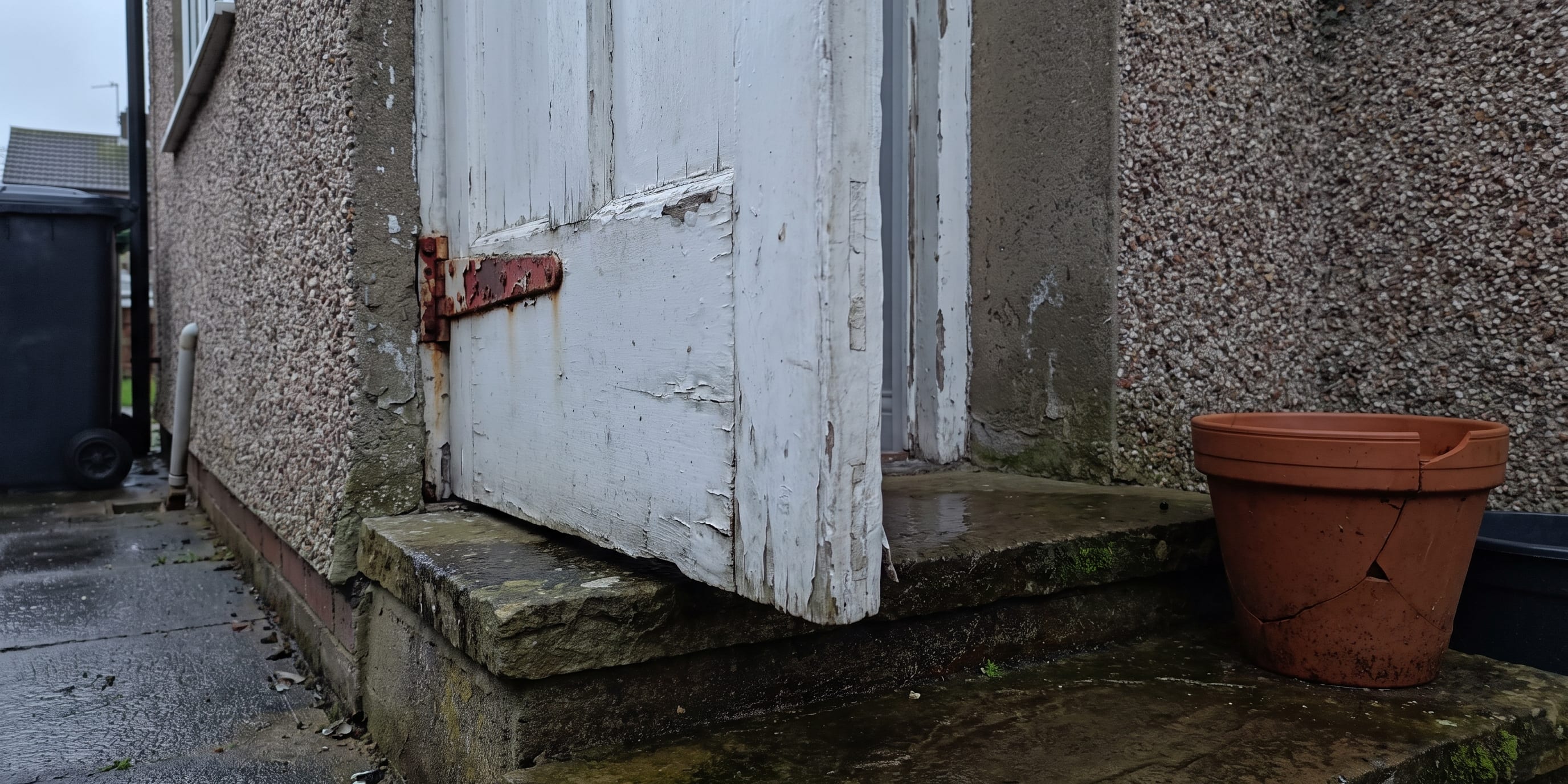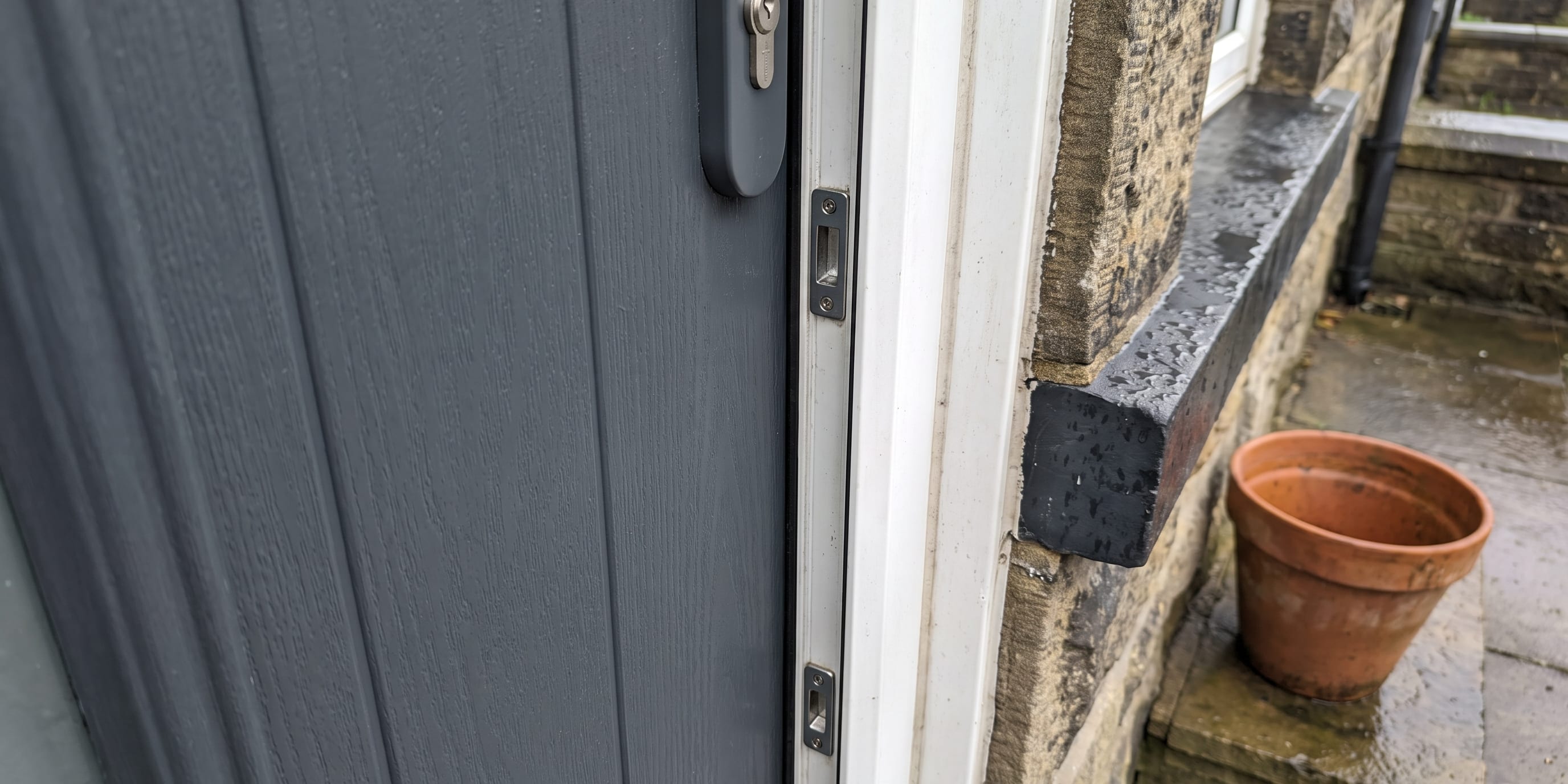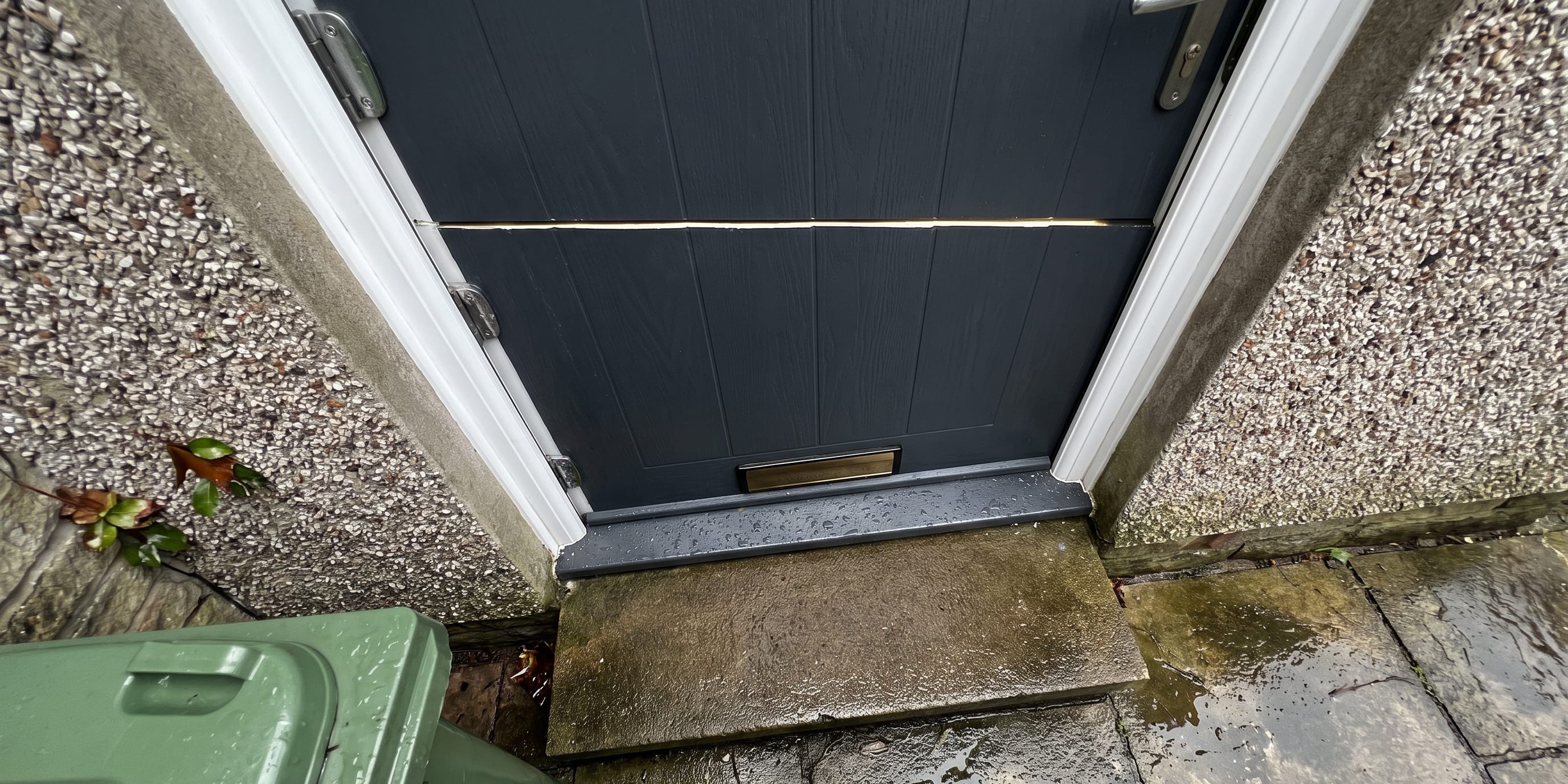
Water Under the Back Door When It Rains: Causes and Fixes
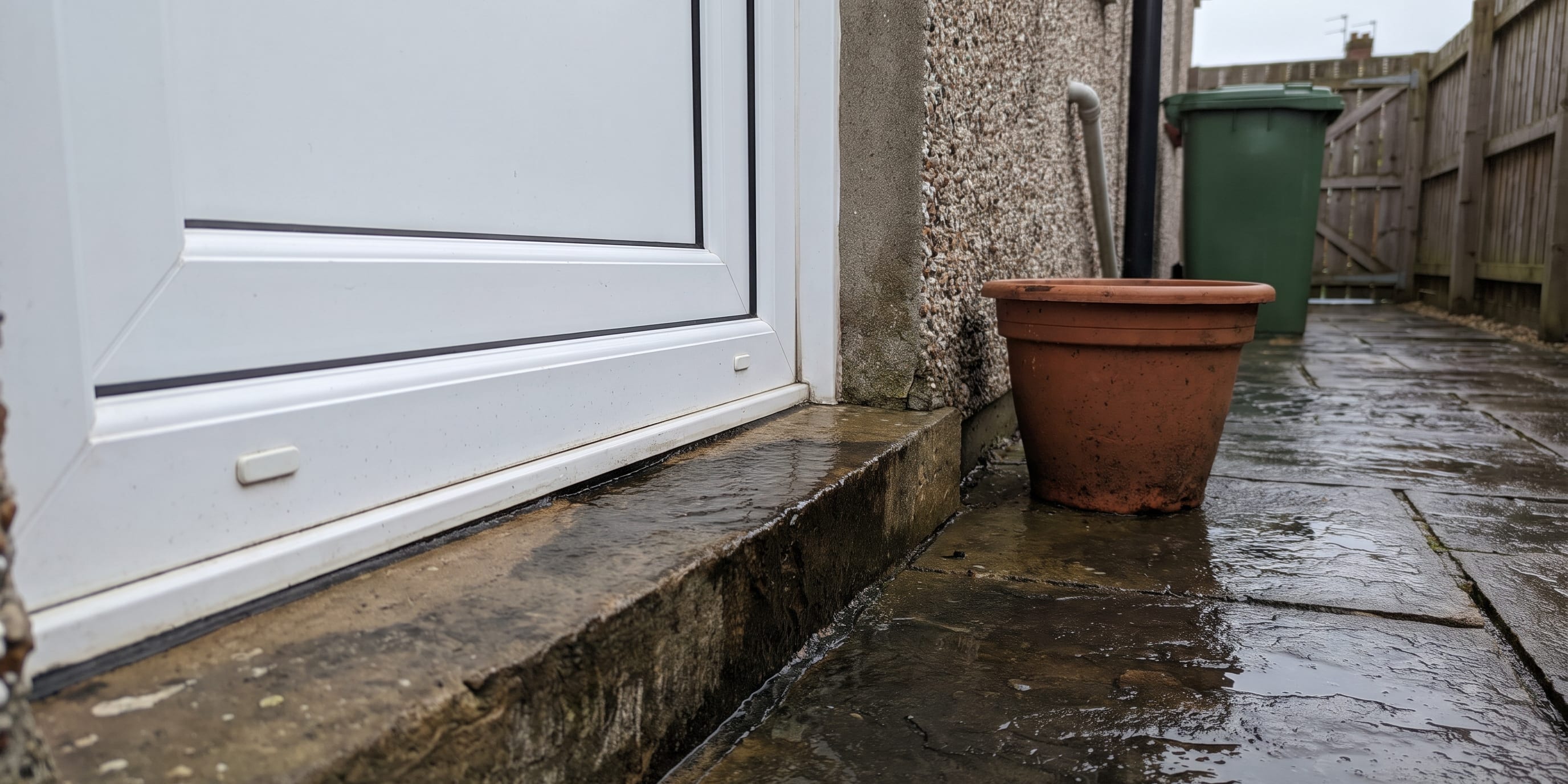
A strip of wet floor inside the back door after a downpour is one of the most common complaints homeowners have about a door that otherwise looks perfectly sound. Search for it and you will be told to buy a tube of sealant. That advice is wrong far more often than it is right.
A modern uPVC or composite door is not a sealed box. It is a drainage system. Water is expected to reach the frame, and the frame is designed to collect it and send it back outside. When water comes in under the back door when it rains, the fault is almost always in that drainage design, in the cill, or in how the door hangs in the opening. Sealant over the top of a drainage fault does not fix anything. It usually makes the leak worse.
Here is how the system is supposed to work, how to find where your water is actually getting in, and where the honest line sits between a repair and a new door.
How your door is meant to handle rain
Three things keep water out of a correctly fitted door, and none of them is silicone.
The cill and its fall. The cill is the horizontal section under the frame. It should project far enough forward to throw water clear of the wall below, it should slope away from the house so water runs off rather than back, and it should have end caps so water cannot escape sideways into the cavity or the brickwork.
Drainage slots and weep holes. Look at the front face of the outer frame and cill and you will usually find small slots, sometimes with little plastic caps or flaps over them. Water that gets past the outer gasket collects in a chamber inside the frame and leaves through those slots. The flaps are there to stop wind blowing water back in. They are an exit, not an entrance.
Gasket compression. Rubber seals run round the door leaf and the frame. They only work when the door is pulled tight against them evenly, which depends on the hinges, the keeps that the multi-point lock engages into, and the door being square in the opening. A door that has dropped slightly on the hinge side, or whose keeps have never been adjusted, can look shut while barely touching the seal at the bottom corners.
Normal, then, looks like this: rain hits the door, runs down the face, lands on a sloping cill, and leaves through the weeps. Nothing pools. Nothing sits.
A step by step check during rain to find the entry point
Do this over one or two wet days rather than guessing.
Start with a visual check during rain from outside. Is water running off the cill, or sitting on it? Is there standing water on the step or patio in front of the door? Is rain being driven sideways against the hinge side?
Tape paper markers at the suspect points. Dry everything inside, then tape short strips of kitchen roll at the two bottom corners of the threshold, at the centre of the threshold, up the hinge side jamb, up the lock side jamb, and directly beneath the letterbox and the bottom glazing bead. After the next shower, the strip that is wettest, and the one that got wet first, points you at the entry route.
Test the seal compression. Open the door, lay a sheet of paper across the frame, close and lock the door, then pull the paper out. Do this at the top, middle and bottom of both sides. Even resistance all round is what you want. If the paper slides out freely at the bottom corners but grips at the top, the door is not sitting evenly and the bottom of the gasket is doing nothing.
Check the weeps. Find the slots on the outer face. Lift the flaps if there are any. Gently probe with a plastic cable tie. Mortar, paint, old sealant, leaf debris and spider webs all block them. A blocked weep turns the frame chamber into a reservoir.
Test the fall. Pour a jug of water slowly along the cill. It should run forward and off. If it sits, or tracks back towards the door, the cill is level or falling the wrong way, which is an installation fault rather than a maintenance one.
Work out whether water is coming over the threshold or from under it. Lift any floor covering at the doorway. Water appearing on the inner lip of the threshold suggests seal or compression problems. Water appearing behind the frame, in the floor edge or under the covering a few inches back, suggests it is tracking under or around the frame.
Sealant job, or structural fault?
Some leaks genuinely are seal problems. Perished or flattened gaskets, a gasket that has shrunk and opened a gap at a corner, a worn brush strip on a low threshold, a failed mastic joint where the frame meets the brickwork at the jambs, keeps that need adjusting to pull the door in tighter. These are straightforward and they stay fixed.
A structural fault is different in kind, not just in degree. It is built into the opening or the door itself, so no amount of weatherstripping will hold it back for long. The common ones:
- A cill set level, or falling back towards the house.
- A cill with insufficient projection, so water runs down the face of the wall and behind the frame.
- Missing cill end caps, letting water run sideways into the cavity.
- A threshold packed only at the ends, so it dips in the middle under foot traffic.
- Drainage slots that were never cut, or that sit in the wrong place relative to the chamber.
- External ground level at or above the threshold, so the door stands in a puddle.
- A door leaf that is twisted, dropped or swollen, or a composite slab that has started to delaminate.
- A frame fitted into an out of square opening and packed to suit, leaving uneven gasket pressure for the life of the door.
Why re-caulking keeps failing
If the underlying fault is in the drainage, sealing the outside is actively counterproductive. A bead run along the front of the cill, or over the weep slots, closes the exit. Water still arrives in the frame chamber, because that is what the chamber is for. With no way forward, it finds the next lowest route, which is inwards.
Even where sealant is in the right place, it is a consumable. It shrinks, it loses adhesion at the edges, and a hairline failure is all driving rain needs. That is fine when sealant is a secondary defence over a frame that already drains properly. It is not fine when sealant is the only thing standing between your kitchen floor and the weather.
The practical test is simple. If you have resealed the same door more than once and the leak has come back each autumn, resealing is not the answer. You have diagnosed the problem without meaning to.
When repair is right, and when it is not
Repair is the sensible route when the frame is sound and sitting correctly, the cill has a proper fall and projection, and the problem is wear or adjustment. Renewing gaskets, adjusting hinges and keeps for even compression, clearing or reinstating weeps, fitting end caps, replacing a threshold brush or weatherbar, adding a drip bar or rain deflector, and sorting external drainage so water runs away from the step will all solve a genuine maintenance leak.
Replacement starts to make more sense when:
- The leak returns after seals and adjustments have been properly renewed.
- The cill or threshold has been set without a fall and cannot be corrected without removing the frame.
- The door leaf will not sit flush however the hinges are adjusted, or the multi-point lock no longer engages squarely.
- The leaf is twisted, swollen or delaminating.
- There is softness, staining or rot in the floor edge, subframe or the structure below the threshold.
- Water has been pooling long enough to damage what the frame is fixed to.
- The door is old enough that adjustment range is exhausted and replacement hardware is no longer available.
At that point, the cost of repeated remedial visits starts outrunning the cost of doing it once, properly. Replacement is also the only opportunity to correct the cill, the fall and the drainage, because those decisions are made when the frame goes in and cannot be retrofitted neatly afterwards.
What a correctly installed back door should have
Without claiming any particular product does something it cannot, a well fitted back or side door should have a cill that projects clear of the wall below with a genuine fall away from the house, end caps fitted and sealed, and a continuous drainage path from the frame chamber to the outside with nothing blocking the weeps. The frame should be bedded and sealed against the structure rather than relying on a bead of mastic on the outside face. The threshold should be supported along its length so it cannot dip. The door should be the right size for the opening rather than a smaller leaf packed out to fit, so that gasket compression is even from top to bottom on both sides. Keeps should be adjusted at handover, not left at the factory setting. And external ground levels, paving, decking and drainage should be considered before the door goes in, not discovered afterwards.
If your back door has been leaking for more than one season and sealant has not held, it is worth having the cill, drainage and hang checked properly before you spend another autumn mopping up. If replacement turns out to be the right answer, our page on uPVC back and side doors sets out what is involved.
Questions
Frequently Asked Questions
Why does water only come under my back door in heavy rain?
Light rain runs down the door face and drains away normally. Heavy or wind driven rain delivers more water than the cill and drainage slots can shed, so any fault in the slope, the weep holes or the gasket compression shows up only when the system is overloaded.
Can I just use silicone to stop water coming under the door?
Usually not, and it can make things worse. A uPVC or composite door frame is designed to collect water and drain it out at the front. Running silicone along the cill face or across the weep slots traps that water inside the frame, where the only remaining escape route is inwards.
Are weep holes supposed to let water in?
No. Weep holes let water out. They are the drainage exit for the chamber inside the outer frame. If water appears to be coming in through them, the usual cause is a blockage further along, a cill that falls back towards the house, or standing water outside the door.
How do I know if my back door needs replacing rather than repairing?
The clearest signs are a leak that returns after seals and adjustments have been properly renewed, a door leaf that will not sit flush however the hinges are set, a threshold that dips or has been set without a fall, and any softness or rot in the floor edge or subframe.
Could raised patio paving be causing the leak?
Yes, and it is a common cause. If the external ground, decking or paving sits at or above threshold level, rain has nowhere to run and the door is standing in a shallow pool. No amount of resealing fixes that.