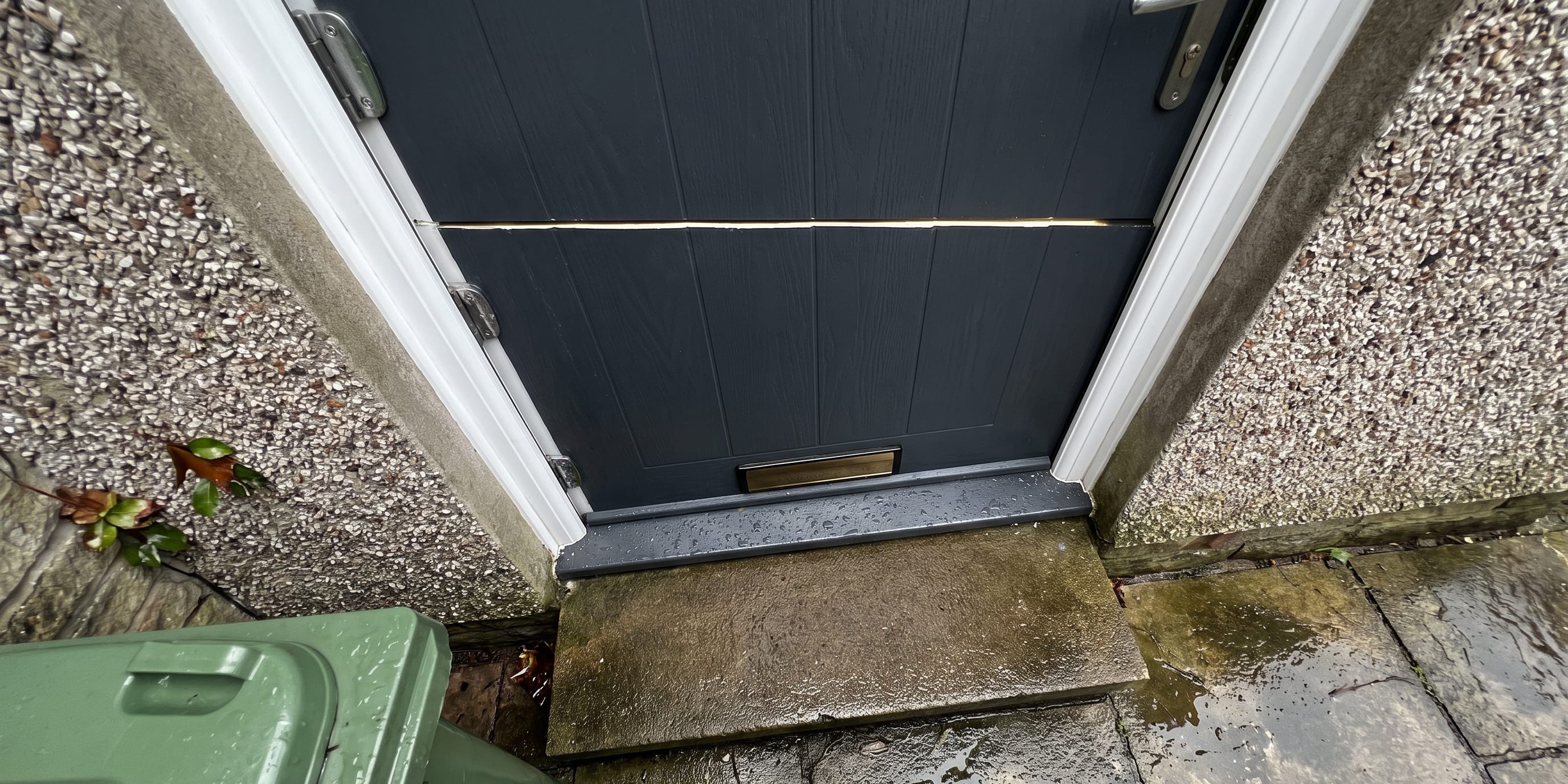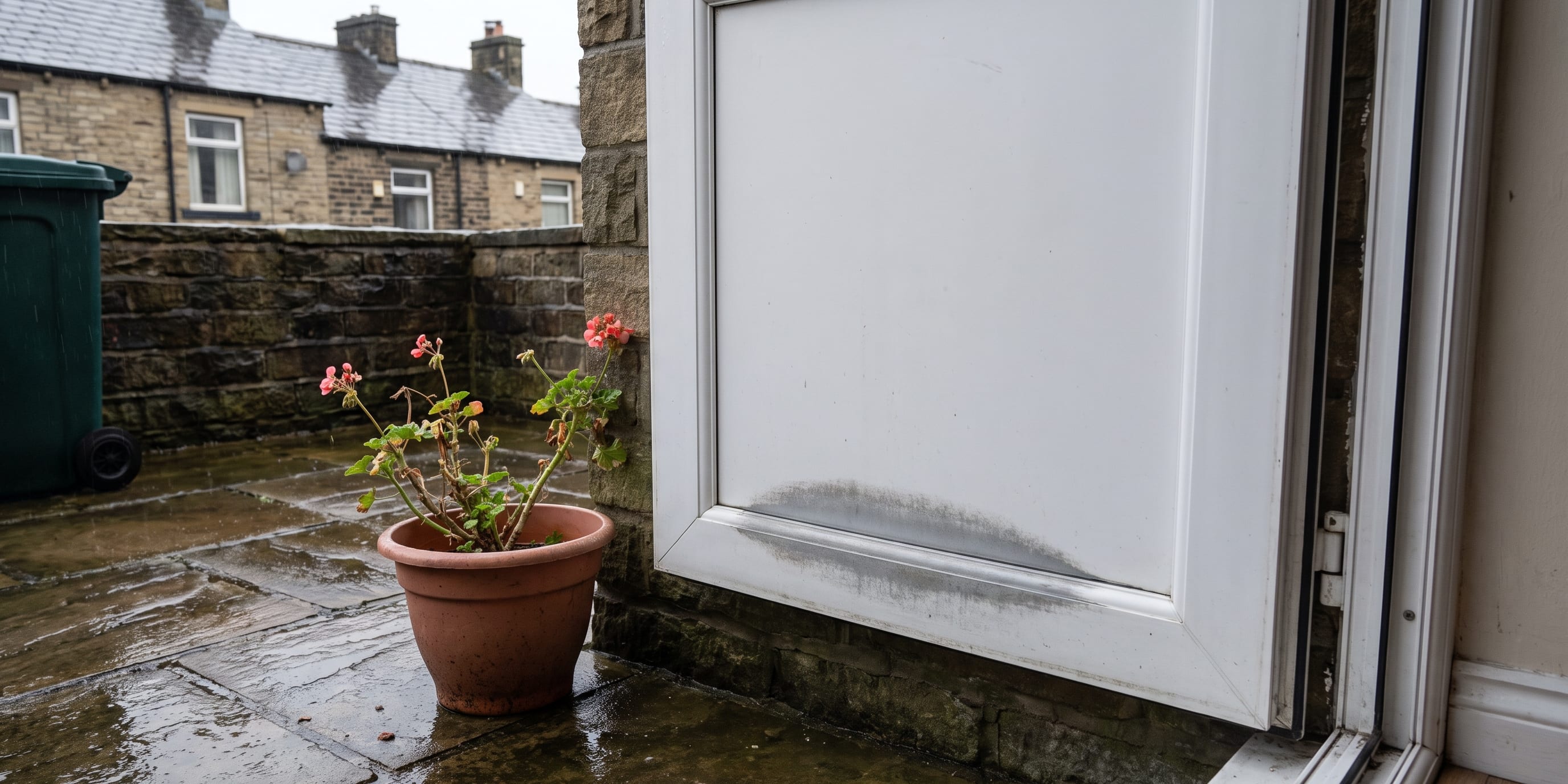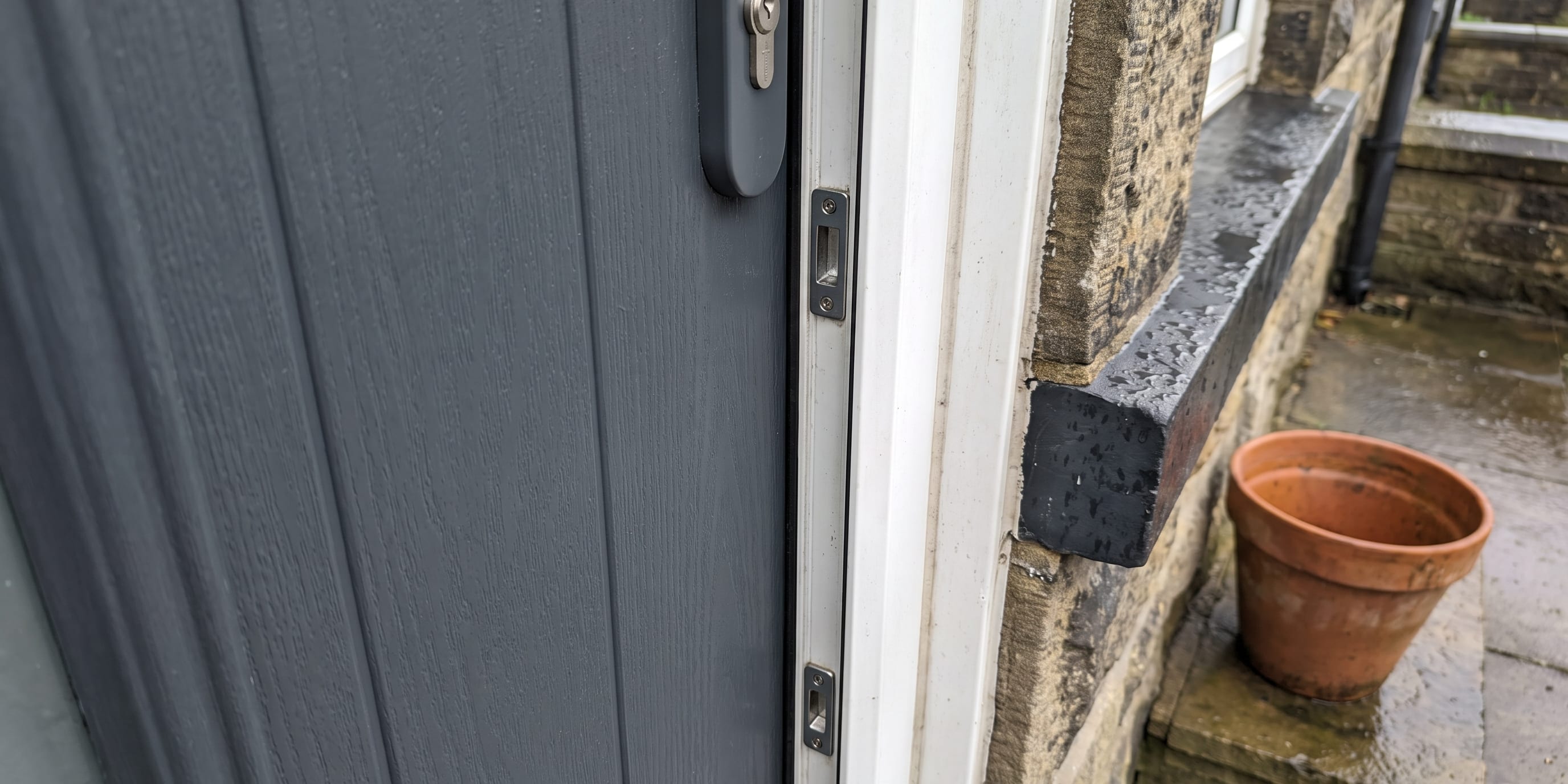
Swollen Wooden Back Door Won’t Shut? Repair or Replace
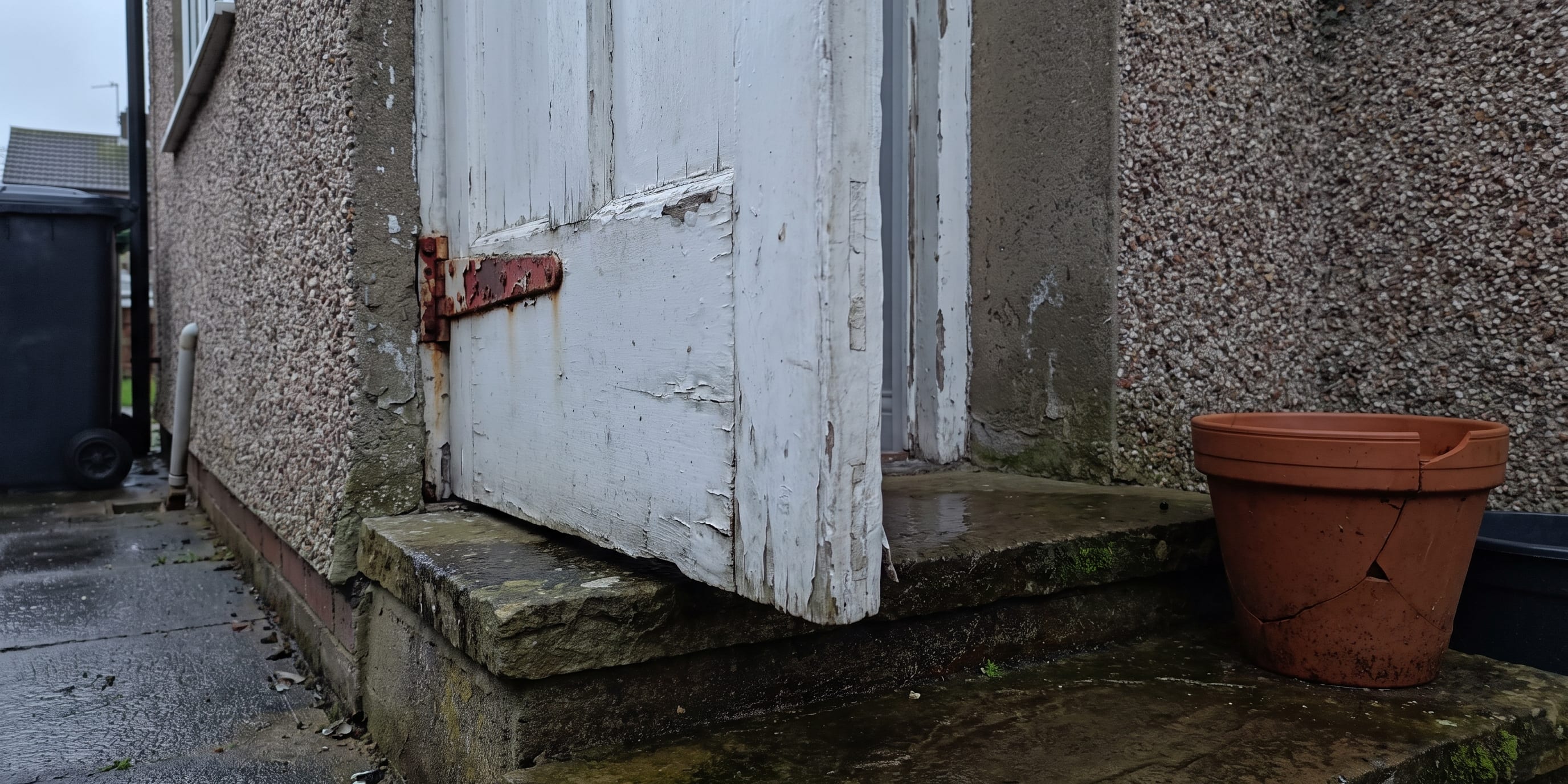
It is usually the same sequence every year. Some time around late October the back door starts to catch on the frame. By November you are putting a shoulder into it. By January you are lifting the handle, leaning and turning the key in one practised movement, and anyone else in the house cannot work out how you do it. Then spring arrives, the door swings freely again, and you forget about it until the clocks go back.
If you have an old wooden back door swollen and won’t shut in winter, nothing has gone wrong with the door in the way a broken thing goes wrong. It is behaving exactly as timber behaves. That is the problem. The question is not how to fix it one more time, it is whether another round of fixing is worth the money and the Saturday.
Why timber swells in winter and not in July
Wood is hygroscopic, which is a precise way of saying it is permanently exchanging moisture with the air around it. When the surrounding air is damp, the timber takes water in and the fibres expand. When the air dries out, the moisture leaves and the timber shrinks back.
A back door is in a worse position than almost anything else in the house for this. It faces the weather on one side and a warm, dry kitchen or utility room on the other, so it is being pulled in two directions at once. It takes direct rain. It sits above a threshold where water collects. And the bottom rail, the part doing most of the swelling, is often the part with the oldest, thinnest paint on it.
Across the winter the door simply does not get enough dry days in a row to shed what it has absorbed. It grows by a millimetre or two in width and height, which is nothing in the abstract and everything when the gap around a door leaf was only ever a few millimetres to begin with. Add a timber frame that is swelling inwards at the same time and the clearance disappears.
Older East Lancashire housing stock makes this more noticeable rather than less. Terraces in Burnley, Accrington, Nelson and the villages up towards the Pennines were built with back doors opening straight into a yard or a ginnel, with little or no porch, canopy or recess to keep rain off. Prevailing weather off the hills is wet for long stretches rather than in short bursts. A door with no shelter, in a climate with few genuinely dry winter weeks, is a door that stays damp from autumn through to March.
Why the usual DIY fixes keep failing
None of the standard repairs are wrong, exactly. They all work for a while. The trouble is what they do over several seasons.
Planing the sticking edge. This is the one everyone reaches for, and it is the one that causes the most long term damage. You are shaving timber off a door that is currently at its largest. Come April the door dries out and shrinks back, and now it is smaller than it was originally, so you have a visible gap and a draught where there was once a seal. Next winter it swells again, possibly past the new line, and you plane again. Repeat that over a few years and the door no longer fills its own frame at any time of year. Worse, planing exposes bare end grain along the edge. Unless you prime and paint it properly the same day, you have just opened a direct route for water into the part of the door that was already the wettest.
Sanding and refinishing. Better than planing, because you are not removing structural timber, but it only buys time. Paint and varnish slow moisture movement, they do not stop it. The film also fails first at exactly the places that matter: the bottom edge, the hinge rebates, around the letter plate, anywhere water sits. Most old back doors have never had the bottom edge properly sealed at all, because it was fitted before anyone thought to paint it and it has never been off since.
Tightening or adjusting the hinges. Genuinely useful if the door has dropped and is catching at the top corner on the lock side. But screws loosen in old timber because the holes have been worked oversize by years of movement, and tightening into a worn hole does very little. Longer screws work once. After that you are into plugging and redrilling, and the hinge stile is getting weaker each time.
More weatherstripping. Adding a thicker seal to a door that is already struggling to close is working against yourself. The door now needs more force to shut, which puts more strain on the hinges and the lock keep, which accelerates the wear that was already there. Foam and brush seals also hold moisture against the timber rather than letting it dry.
Each of these is a reasonable afternoon’s work. The issue is that you are doing them again next year, and the year after, and the door is slightly weaker each time.
What makes uPVC different for this specific problem
uPVC does not absorb moisture. There is no fibre structure to take water in, so there is no seasonal expansion and contraction worth measuring. A uPVC door that shuts cleanly in August shuts the same way in February.
The construction matters as much as the material. A modern uPVC door leaf has internal reinforcement running through it, which is what stops it bowing or twisting under the pressure difference between a cold yard and a heated kitchen. The seal is a compression gasket set into the frame rather than a strip pinned to timber, and a multi-point lock pulls the leaf into that gasket at several points up the height of the door rather than at one point beside the handle. That even pressure is why a uPVC door does not develop the one draughty corner that old timber doors always seem to have.
None of this means uPVC is maintenance free in some absolute sense. Hinges and locks still need the occasional adjustment, and the seals will eventually want replacing. But the specific failure mode you are dealing with, a door that physically changes size with the weather, is gone.
The point where repairing stops making sense
There is no single moment, but there are signals. If you recognise most of these, you are past the useful life of the door rather than between repairs.
The swelling is recurring, not occasional. One bad winter after a long wet autumn is weather. Recurring swelling, four winters in a row, is the door telling you its finish has failed and it is no longer shedding water. Recurring problems need a different answer from one-off ones.
You can feel draughts with the door shut and locked. That usually means previous planing has left the leaf undersized, or the frame has moved. Either way the seal is gone and you are heating the yard.
The bottom rail is soft. Press a thumbnail into the timber at the base, particularly at the corners. If it gives, that is wet rot, and it is in the one part of the door you cannot sensibly cut out and replace. Rot at the base also means the door is now wicking water upwards continuously.
The lock or handle is wearing out. Years of lifting, shouldering and forcing a stiff door wrecks the mechanism. A back door with a worn single point lock in a frame that no longer holds it tight is a security weak point, and it is the door most often out of sight from the street.
You have stopped using it. Plenty of households quietly give up on the back door over winter and go round the front. That is the clearest answer of all.
Set against that, the sums are not complicated. Repairs are not free: materials, a day of your time, and occasionally a tradesperson. Multiply by the number of winters you expect to stay in the house, add the heat going out through a failed seal, and the gap between repairing and replacing narrows quickly.
What replacing the back door actually involves
The process is deliberately straightforward. We come out to the property and look at the opening, the frame, the threshold and the condition of the surrounding brickwork or stone, because a back door in an old terrace is rarely a standard size and the existing frame may be hiding damage. You get one written price from that visit, covering the door, the fitting and the making good. Not a figure over the phone that changes when someone sees the job.
Fitting a back door is typically a single day. The old door and frame come out, the new frame is fixed and sealed, the door is hung and adjusted, and the lock is tested before we leave. Replacement external doors fall under building regulations, and Win-Door Fit is FENSA registered, so the work is certificated properly. The installation carries a ten year insurance-backed guarantee.
For most East Lancashire back doors the practical choice is a solid uPVC leaf with a multi-point lock, in a colour that suits the property rather than defaulting to white. If you want to see the options and what the specification includes, have a look at our uPVC back and side doors and we can arrange a visit to measure up and price the job properly.
Questions
Frequently Asked Questions
Why does my wooden back door only stick in winter?
Timber absorbs moisture from damp air and rain, and expands as it does. In winter the air outside is wetter for weeks at a time, so the door takes on moisture faster than it can dry out and grows slightly in every direction. In summer it dries, shrinks back and shuts freely again, which is why the problem seems to come and go.
Is planing the edge of a swollen door a permanent fix?
No. Planing removes timber at the swollen size, so when the door dries out in spring it shrinks below its original dimensions and leaves a gap. You then have draughts in summer and, if the swelling is worse the following winter, the same sticking problem again. Each round of planing also breaks the paint seal on the edge and lets in more water.
Will a uPVC back door swell or warp like timber?
uPVC does not absorb moisture, so it does not swell with damp weather in the way timber does. A modern uPVC door also has a reinforced core and a multi-point lock that pulls the leaf evenly into the frame, which keeps the seal consistent through the year.
How do I know when a wooden back door is past repairing?
The usual signs are recurring swelling that returns every single winter, soft or crumbling timber at the bottom rail, daylight or draughts around the edges once the door is shut, and a lock or handle that has been forced so often it no longer engages cleanly. Any rot at the base is the clearest signal, because that is the part of the door you cannot easily replace in isolation.
Does a replacement back door need FENSA registration?
Replacement external doors fall under building regulations for thermal performance, so the work needs to be certificated. Win-Door Fit is FENSA registered and the installation is covered by a ten year insurance-backed guarantee.