uPVC Door Dragging on the Frame: Easy Fix or Replace?
A door that scrapes, catches or has to be lifted by the handle before it will shut is one of the most common complaints homeowners have about uPVC. It is also one of the most misdiagnosed. Half the internet will tell you to reach for an Allen key and turn a hinge screw. Sometimes that is exactly right. Sometimes the door will be back to dragging inside a month.
The useful question is not "how do I adjust a uPVC hinge". It is "is this door worth adjusting at all". Below is an honest way to work that out at home, before anyone quotes you for anything.
What dragging actually tells you
When a uPVC door drags, the door slab and the frame are no longer in the relationship they were manufactured to be in. One of three things has changed:
- The door has dropped or shifted on its hinges.
- The door slab has deformed, usually bowing, warping or twisting.
- The frame has moved, because the opening around it has moved.
Only the first of those is a genuine five minute job. The second and third are structural in nature, and no amount of hinge adjustment fixes a shape problem. That is why so many people report that a door was "fixed" and then started catching again within weeks.
Quick checks before you assume the worst
Do these before you ring anybody. They take about ten minutes and a spirit level.
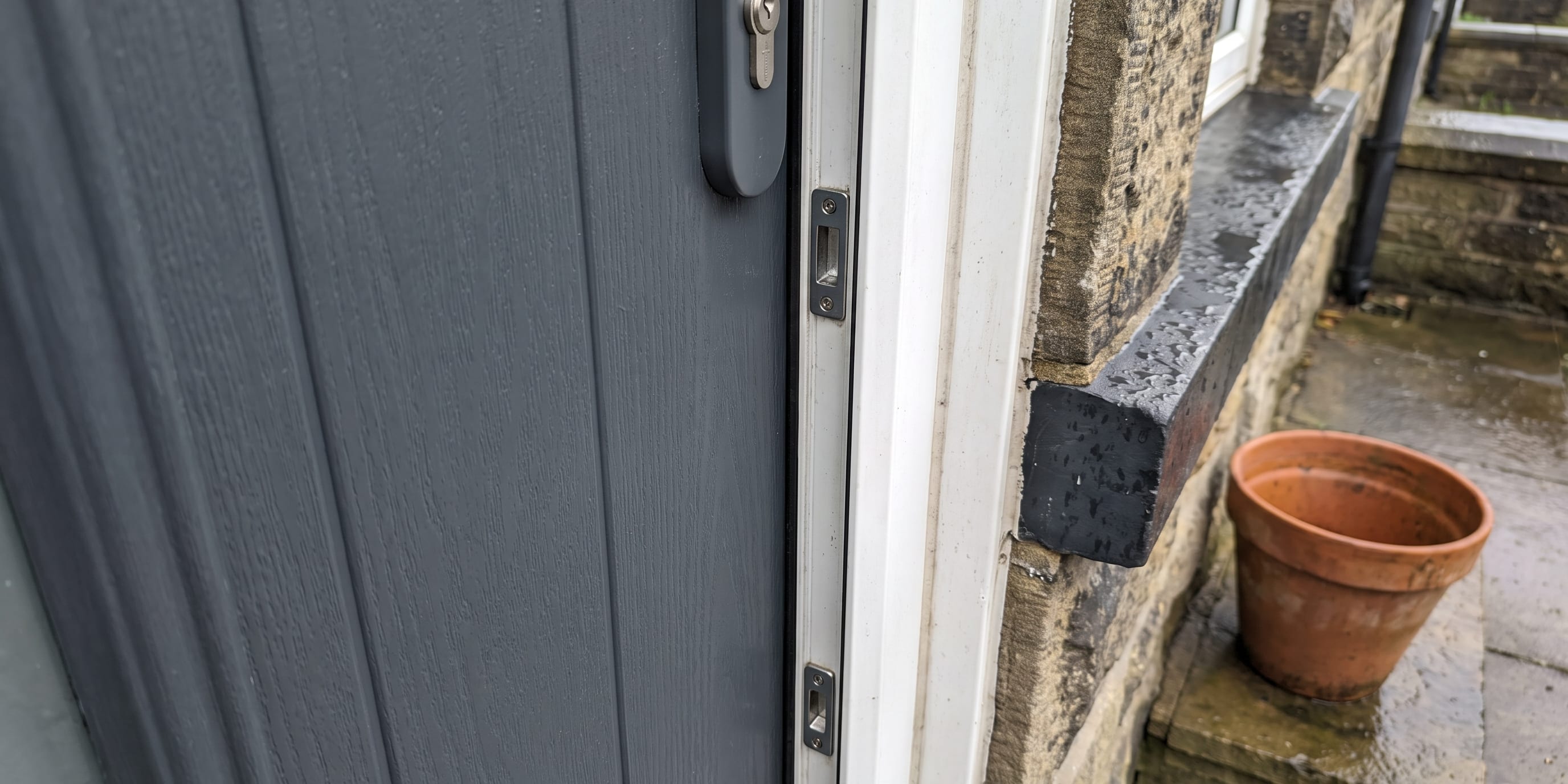
Find where it catches. Open the door, slide a sheet of paper or a thin strip of card around the gap between slab and frame as you close it, and note exactly where it binds. Top corner on the handle side, bottom corner on the handle side, the middle of the long edge, or along the threshold. Where it catches matters more than the fact that it catches.
Check the gap consistency. With the door closed, look at the gap running down the handle side from top to bottom. It should be broadly even. A gap that is generous at the top and pinched at the bottom (or the reverse) usually means the slab has dropped or the frame has racked. A gap that is fine at both ends but closes up in the middle is a different and more serious symptom, covered below.
Level the frame, not the door. Put a spirit level on the frame head, then on both jambs. If the head is off level or a jamb is out of plumb, the frame itself has moved. Adjusting the door will only make it fit a frame that is the wrong shape, and it will pull the lock keeps out of alignment in the process.
Look at the mitres. uPVC frames and door slabs are welded at 45 degrees in each corner. Those welded joints should look clean and closed. Open mitres, hairline splits running away from a corner, or a weld that has clearly parted are a sign the frame has been under load it was not designed to take.
Try the lock with the door open. Lift the handle and watch the hooks and rollers extend. If they move smoothly in the air but jam when you close the door, the alignment is off. If they are stiff even in the open position, you may have a failing gearbox rather than a fit problem.
When it probably is a simple adjustment
If the gaps are near enough even, the frame is level and plumb, the mitres are sound and the slab looks straight when you sight along it from a low angle, you are most likely looking at a door that has settled slightly on its hinges. That is normal on any door that gets heavy daily use. The fix is a small adjustment at the hinges and, occasionally, a repositioning of the lock keeps in the frame.
Signs it is not a hinge fix
Some symptoms should stop you reaching for the Allen key.
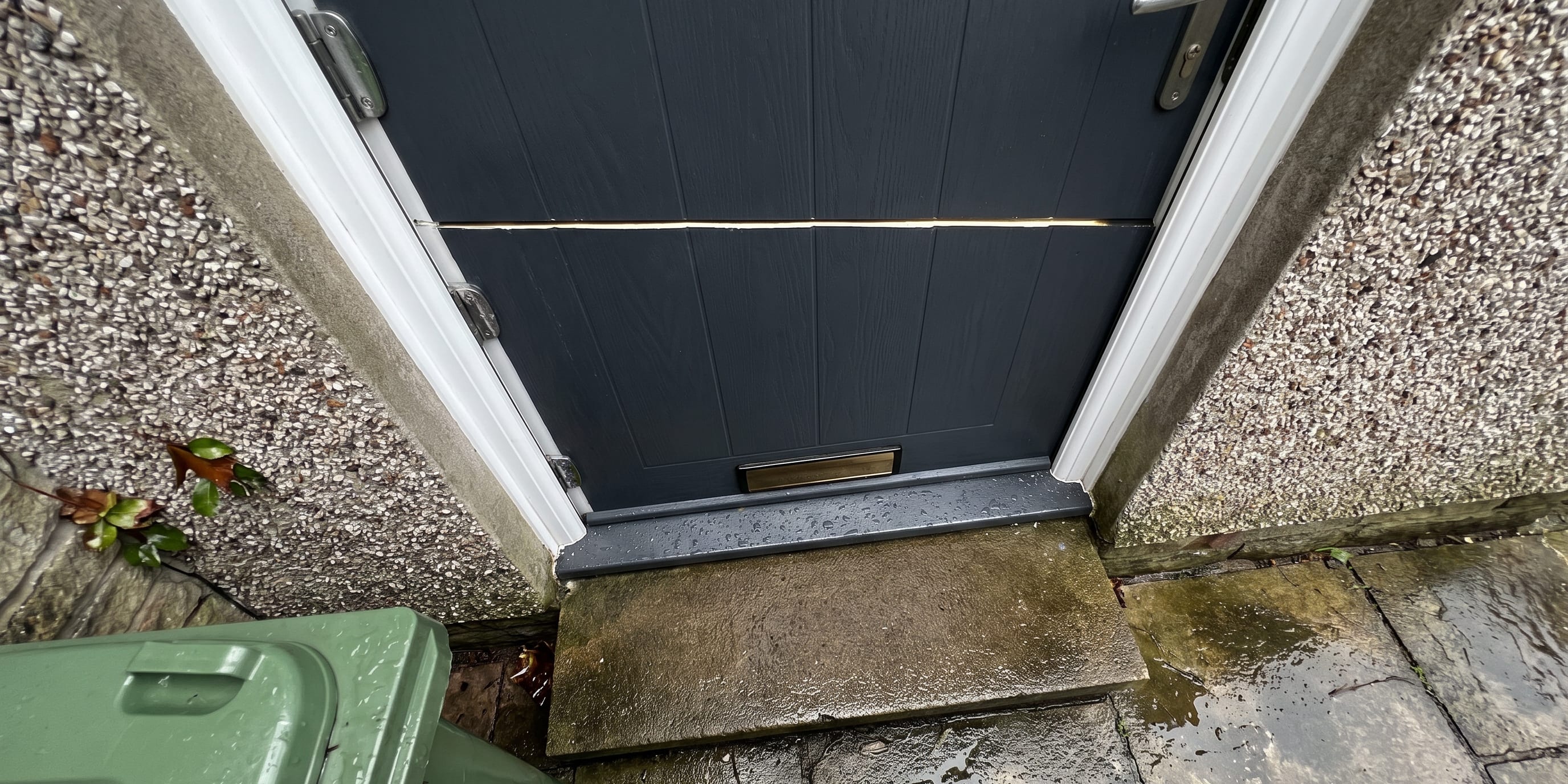
The slab meets the frame at the top and bottom but gaps in the middle. This is the classic signature of a bowed or warped door. The slab has flexed along its length, usually from heat, from long term pressure on a poorly adjusted lock, or from reinforcement inside the panel that has failed. Adjusting the hinges moves the whole slab; it cannot flatten it. You can often see the bow by closing the door and looking at the weather seal, which will be crushed at the ends and untouched in the middle.
The door is twisted. Close the door and look at the four corners. If three sit tight to the frame and one stands proud, the slab is out of wind. Warping of this kind is very hard to correct and almost never worth chasing.
The frame is cracked, split or has open welds. Once a welded corner has failed, the frame has lost rigidity. It will keep moving, and any adjustment you make is temporary.
The frame is visibly out of square or bowed inwards. This usually means the masonry around the opening has moved, or the frame was packed poorly when it was first fitted and has been carrying load ever since.
The threshold is deflecting. If the bottom of the frame flexes when you stand on it, the fixings or the substrate beneath have given up.
Why this comes up so often in Lancashire homes
Two things put local doors under more strain than the national average.
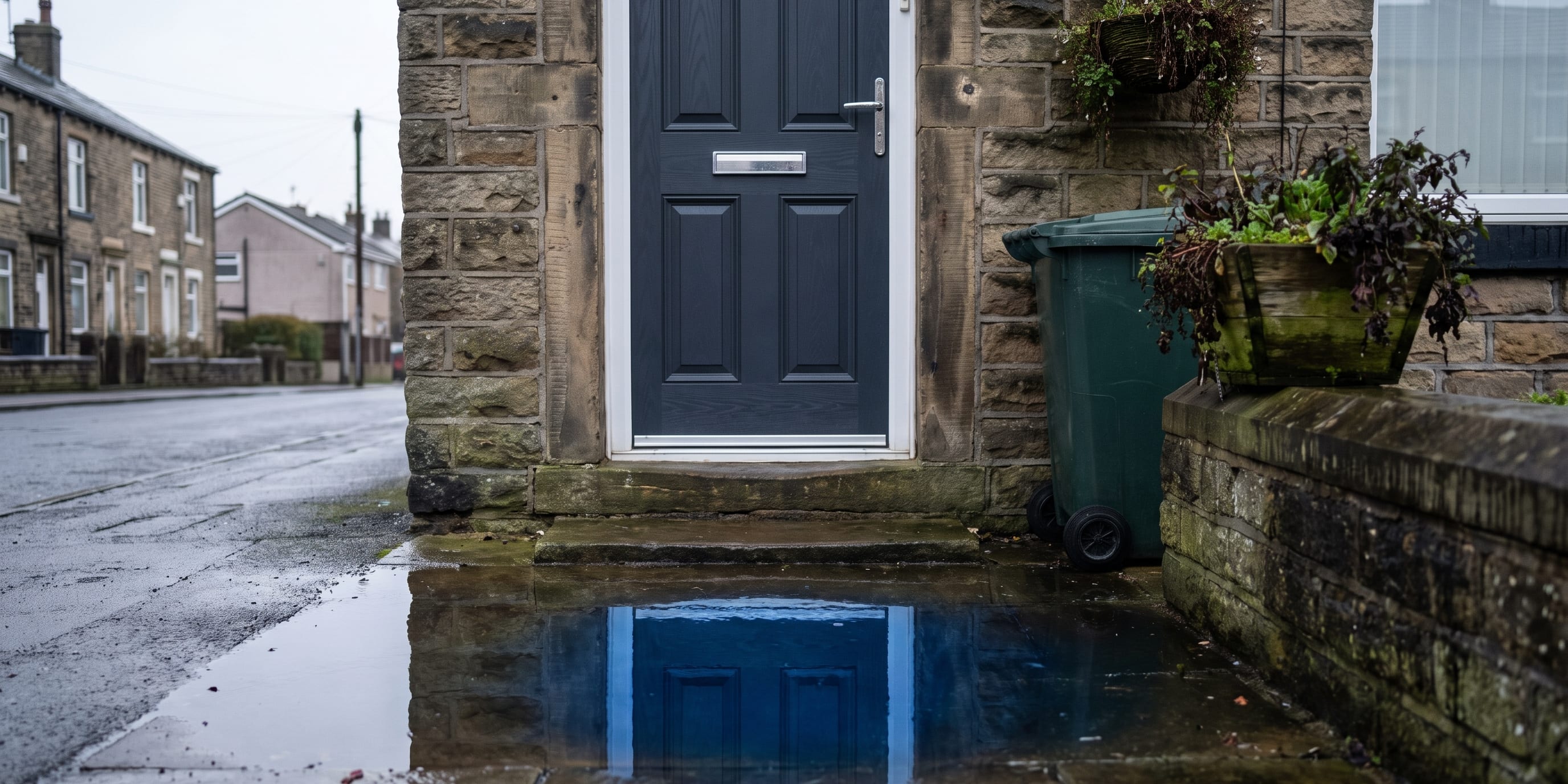
The first is weather exposure. A lot of Lancashire housing sits on open elevations with little shelter, taking wind driven rain from the west for months at a time. Prevailing wind loading pushes and pulls on a closed door every day of a wet winter. Over years, that works on hinges, on lock keeps and on the frame fixings themselves. Doors on gable ends and rear elevations facing open fields take the worst of it.
The second is age of stock. Much of the region’s uPVC went in during the first big wave of replacement work, and a fair amount of it is now well past twenty years old. Early systems used thinner profile walls and less internal reinforcement than current ones, and older hinges have less adjustment range to play with. Add ordinary masonry settlement in terraced and semi detached stock, particularly around openings that were altered at some point, and a frame that was perfectly square in 2003 may simply not be square now.
What happens if you leave it
A dragging door is not just an irritation. It is a door that is no longer sealing, and water ingress is the real cost of ignoring it.
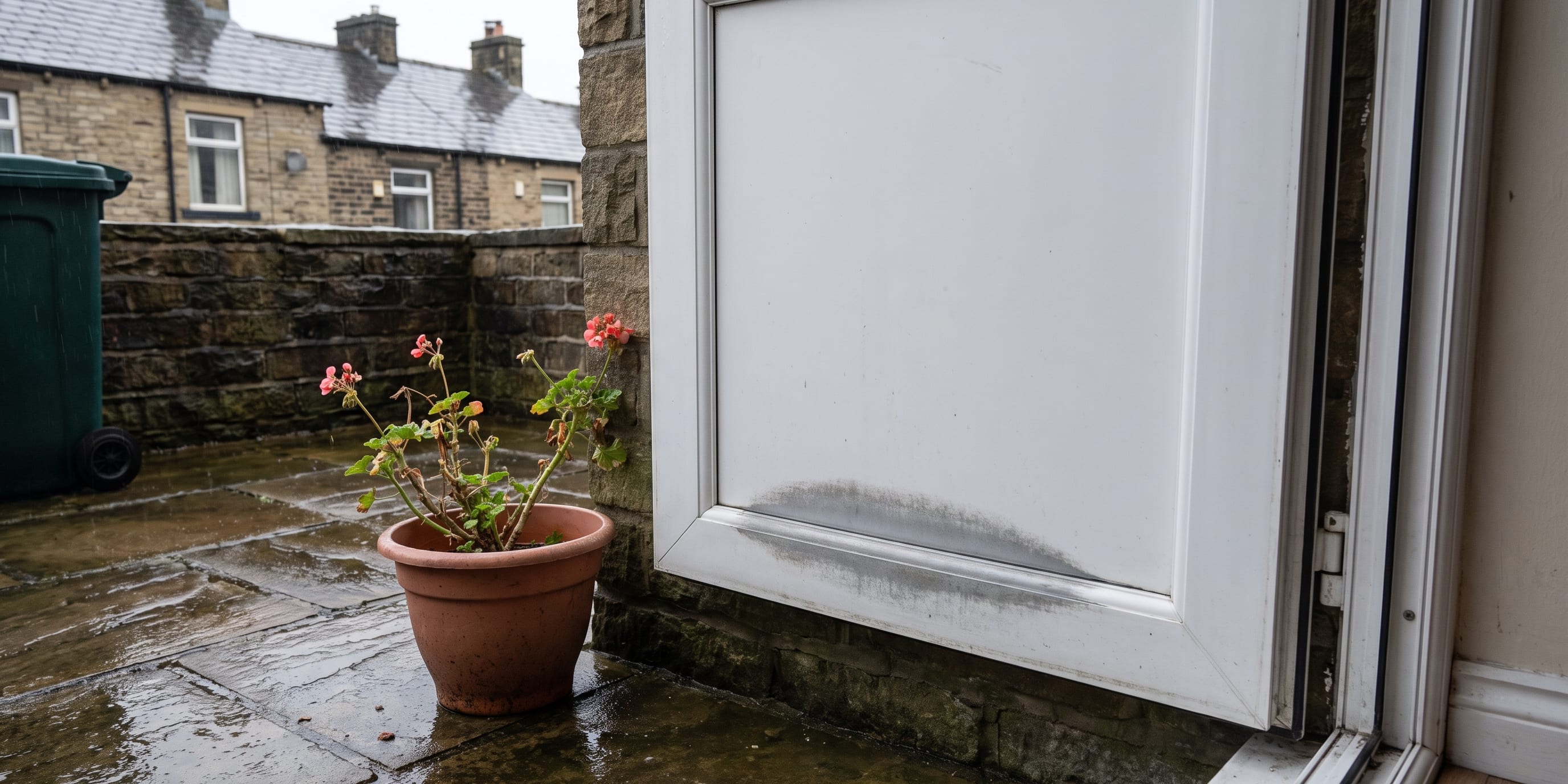
The compression seal around a uPVC door only works when the slab pulls evenly into the frame all the way round. If the door is riding on one corner, the seal is crushed in one place and slack in another, and wind driven rain will find the slack part. Water that gets past the seal sits in the frame chambers, works into the fixings, and in older doors reaches the steel reinforcement inside the panel. Once corrosion starts there, deterioration accelerates and it will show up on the reveal and skirting inside before long.
There is a mechanical cost too. Every time you shoulder a door to get the hooks to engage, you are loading a multipoint gearbox sideways. Gearboxes are generally reliable parts, and when they fail early it is very often because they have spent years being forced. A locking mechanism that has to be fought is also a security weakness, because there is no guarantee the hooks are fully seated.
The honest decision point
Here is the calculation most homeowners are actually trying to make.
If the slab and frame are sound and the door has simply drifted, adjustment is clearly the right call. Have it adjusted, keep an eye on it, and get on with your life.
If the problem keeps coming back, that tells you something. A door that needs adjusting once every few years is behaving normally. A door that needs adjusting every few months is not being fixed, it is being managed. Each visit costs money and none of it accumulates into anything. Meanwhile the seal is failing between visits, and the lock is wearing.
If the slab is bowed or twisted, if welds have opened, or if the frame has moved with the building, adjustment is not a fix at any price. You can spend a modest amount repeatedly for years and still end up replacing the door, only later and with water damage to the reveal in the meantime.
The blunt version: repairs make sense when the door has a fault. Replacement makes sense when the door has a shape problem or the frame has lost integrity. The useful thing a fitter can do is tell you honestly which of those you have.
Where Win-Door Fit sits on this
We do not offer hinge repair callouts. We are not a repair service, and we would rather say that plainly than take a booking we are not set up for. If your door needs a hinge adjusted, a local repair engineer or a locksmith who works on multipoint gear is the right call, and that is what we will tell you.
What we will do is give you a straight answer on whether replacement is genuinely warranted. If we look at a door and it is sound, we will say so. There is no benefit to us in selling anyone a door they do not need.
Where a replacement is the right call, the fitted door is covered by a 10-year guarantee, and Win-Door Fit is FENSA registered, so the installation is self certified against Building Regulations and you get the certificate that goes with it. That matters more than people expect, particularly when you come to sell.
If your door is catching and you have worked through the checks above without reaching a clear answer, the sensible next step is to have someone look at the frame properly rather than guess. You can see what is involved in replacing a rear or side entrance door, including frame condition and threshold options, on our uPVC back and side doors page.
Questions
Frequently Asked Questions
Can a uPVC door dragging on the frame be adjusted back into line?
Often yes, if the door slab itself is straight and the frame is square. Most uPVC hinges allow small adjustments for height and lateral position, which is enough to clear a light rub. If the slab has bowed or the frame has moved, adjustment only shifts the problem elsewhere.
Why does my uPVC door only drag in summer?
uPVC expands in heat, and dark coloured or south facing doors pick up the most. A door with very tight clearances can bind on hot days and swing freely again once it cools. Seasonal binding that always clears is usually tolerable. Binding that no longer clears means something has moved permanently.
Is a dragging uPVC door a security risk?
It can be. If the door has to be lifted or shouldered to throw the hooks and rollers, the multipoint lock is not seating properly and the mechanism is being strained every time it is used. Lock gearboxes commonly fail because of misalignment rather than age.
How do I know if my door frame has dropped?
Hold a spirit level against the frame head and both jambs, then measure the gap between door and frame in several places down each side. A frame that is out of level or out of plumb, or gaps that widen and narrow along the same edge, points to movement in the frame or the opening rather than the door.
Do you carry out hinge repair callouts?
No. Win-Door Fit supplies and fits replacement doors rather than running a repair service. If a door is worth adjusting, we will say so rather than quote you for a replacement you do not need.