How Disruptive Is a Full House Window Replacement Really?
Most people asking how disruptive a full house window replacement is have already decided they need the work done. What they actually want to know is how many days they will be living in a building site, whether they need to book time off, and whether the house will be secure overnight.
The honest answer is that a full house job is more disruptive than a single window and far less disruptive than most people fear. The bigger variable is not the number of windows. It is how the job is organised, and in particular whether one crew runs it from start to finish or several different teams are juggled across it.
What a "full house" job usually includes
Very few full house jobs are only windows. In practice a whole house replacement tends to be windows plus a composite front door, and often a back door, a side door into a utility or a set of patio doors as well. All of it gets surveyed, quoted and fitted as one project.
That matters for disruption more than it might sound. When windows, the front door and the patio doors are treated as three separate purchases, you get three surveys, three delivery dates, three sets of dust sheets and three crews who each want access to a different part of the house. When it is one project, there is one survey visit, one set of measurements taken by the person who will oversee the fit, and one continuous run of work with a defined end date.
It also removes the most common source of finger pointing about which trade caused a problem where a new door meets a reveal, or where a threshold meets a finished floor.
A realistic day by day timeline
Take a common example: a Lancashire semi or mid terrace with eight to ten windows and a composite front door, no bay, reasonable access front and back. With one crew of fitters working the job through, that is typically two to four working days.
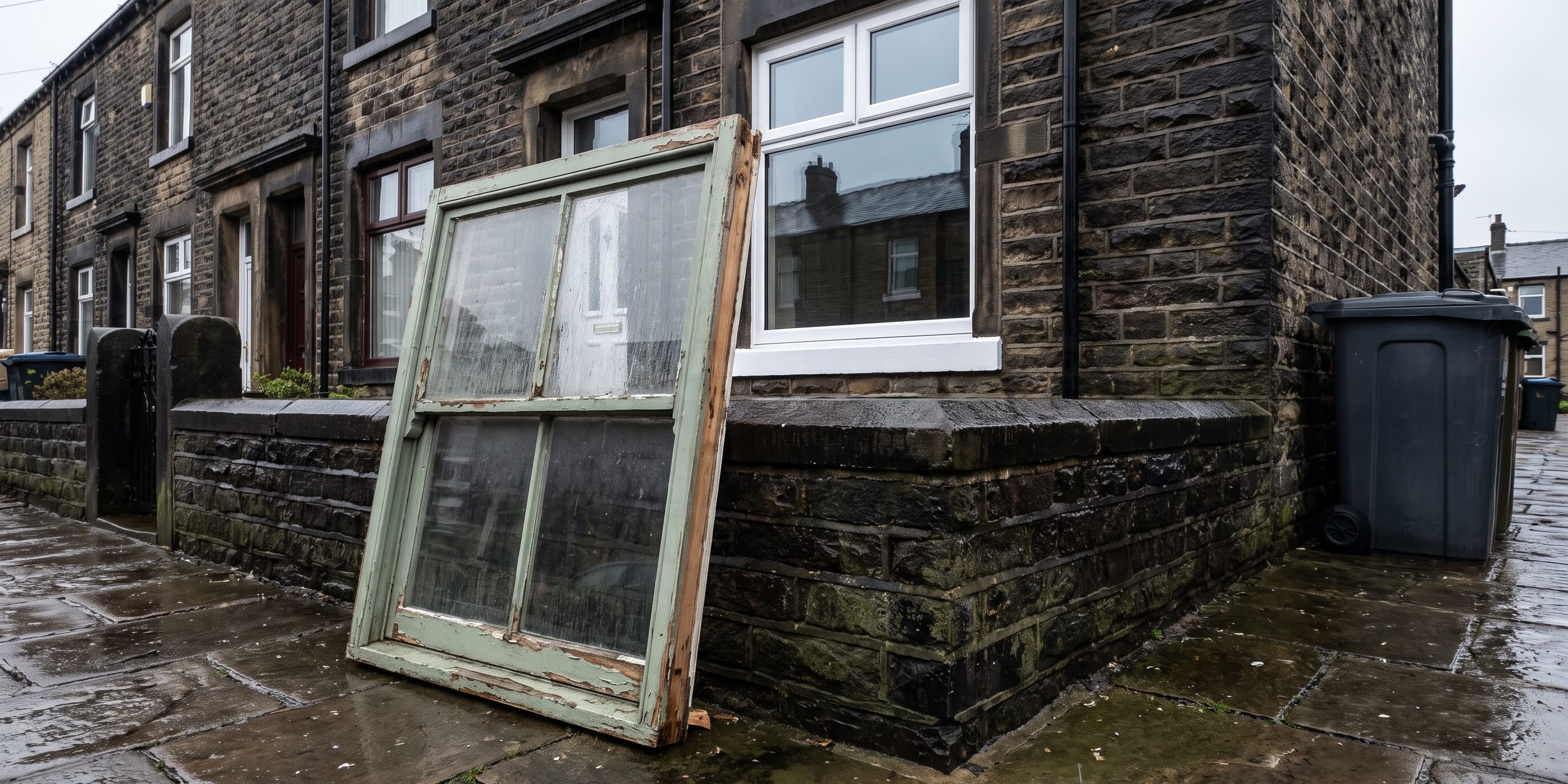
Day one usually starts with protection and setup rather than window removal. Dust sheets down, floor protection on routes in and out, a work area established outside, and a quick walk round to confirm which openings are going in which order. The first elevation then comes out. Fitters generally work one opening at a time: old frame out, opening cleaned back, new frame in, packed, fixed, levelled, glazed, sealed. Each window goes back in on the same day it comes out. You are never left with an open hole overnight.
Day two typically covers the next elevation, often the front, where the work is more visible and the sealing and pointing take a little longer because the finish is on show from the street.
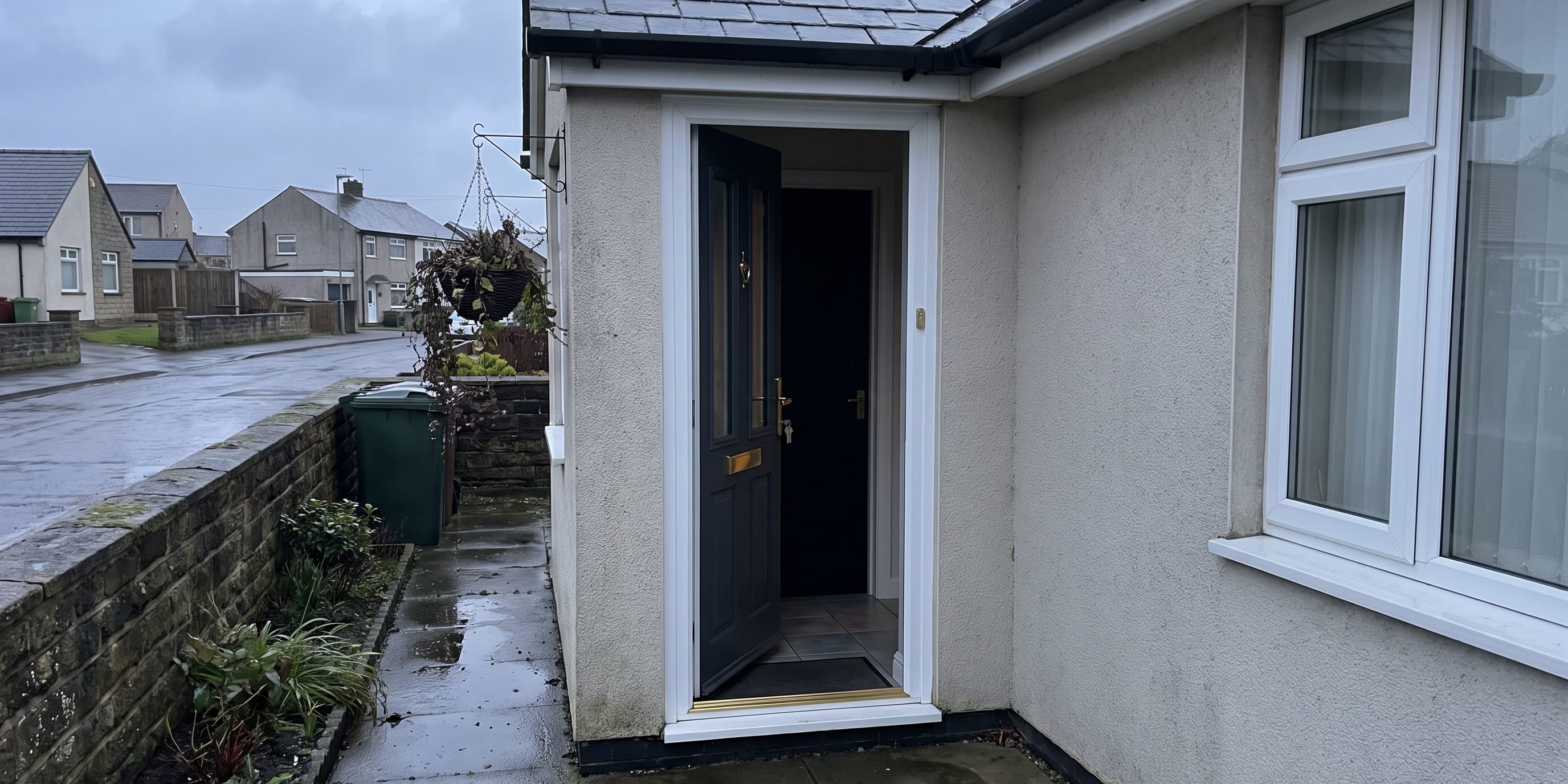
The front door day is usually held until later in the job. Removing and replacing a front door takes a decent block of uninterrupted time, so it tends to be scheduled as a morning start rather than squeezed into the end of an afternoon. The door is out, the new frame is fixed and adjusted, the multipoint lock is tested, and the handover checks are done before the crew leaves.
Final day is second fix and finishing: trims, internal sills, silicone lines, external pointing where needed, adjusting every hinge and handle, cleaning glass and frames, clearing waste and taking the old frames away.
The reason a single crew running one job at a time compresses this is simple. Nobody is waiting for another team to become available, and nobody arrives on day three needing to be told what happened on day one.
Bay and bow windows add time, and sometimes scaffolding
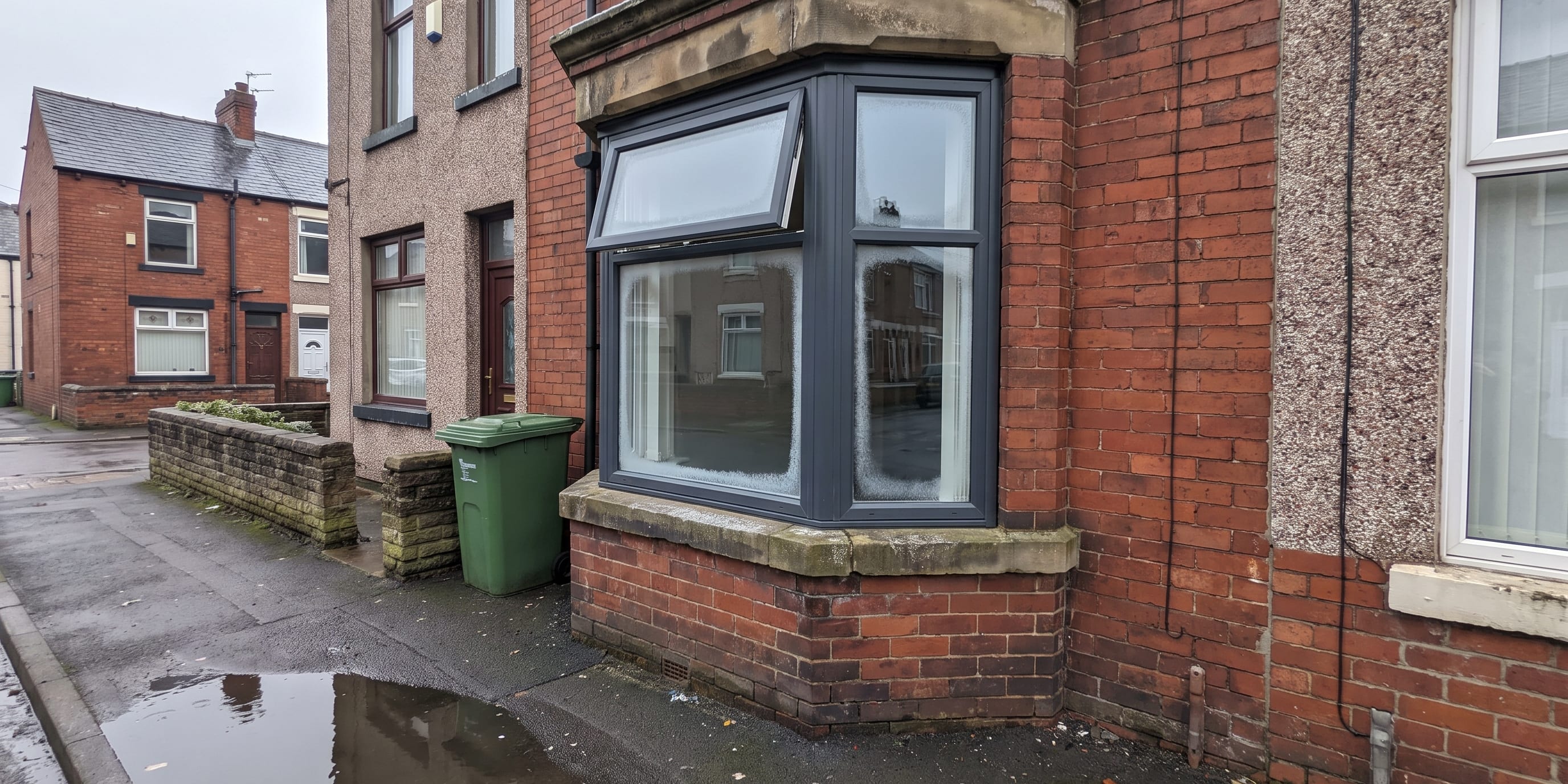
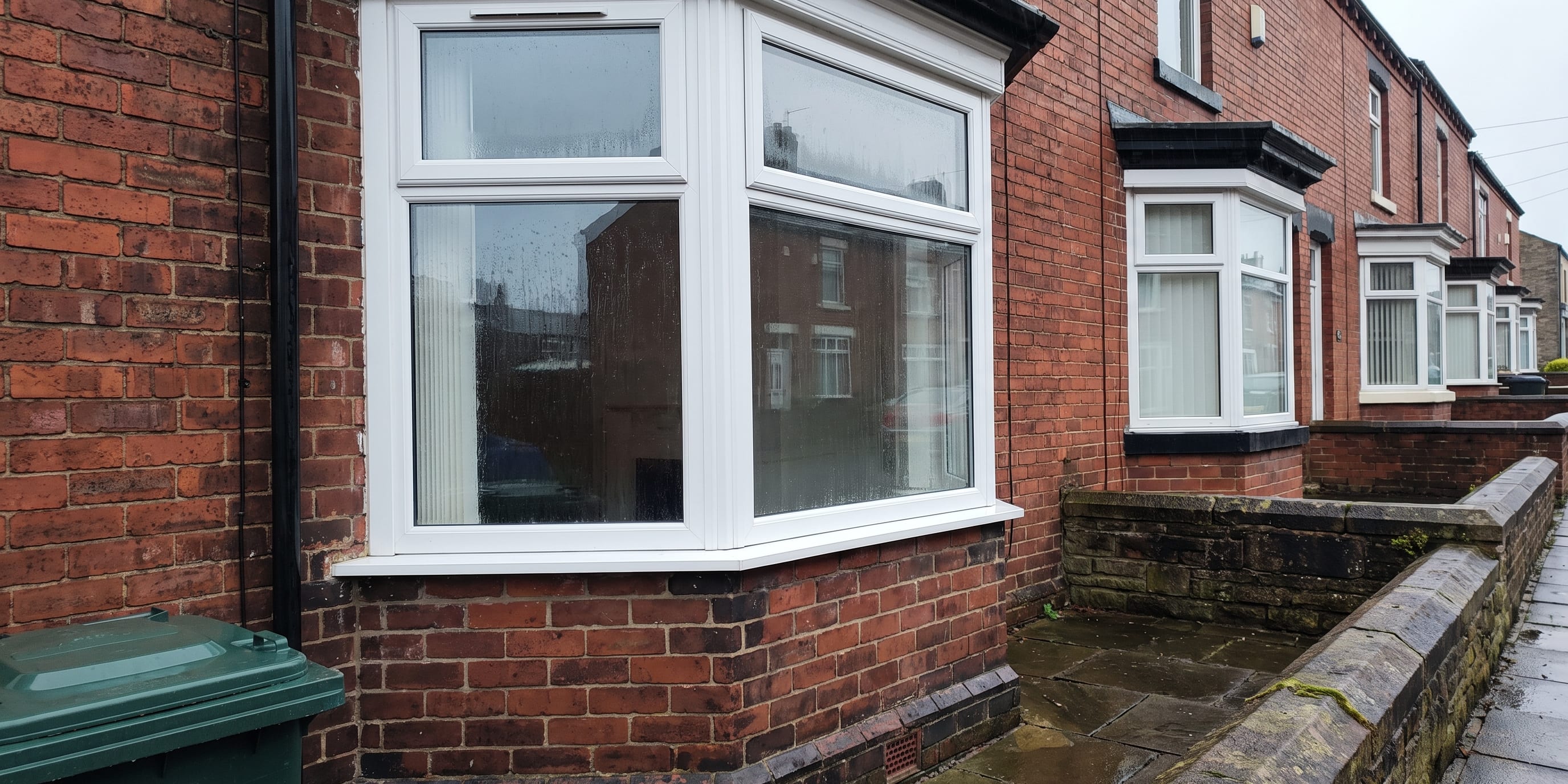
East Lancashire has a lot of Victorian and Edwardian terraces with bay windows, and a bay is genuinely a different job from a flat opening.
A bay is a structural assembly. The frames sit under a bay pole or load bearing corner post that carries weight from above, whether that is a tiled bay roof, a stone entablature or the wall of the bedroom bay sitting directly on top. You cannot simply pull the old bay out and leave the load unsupported while you build the new one. Proper practice is to prop and support the structure above before removal, then transfer the load onto the new frames and bay poles as they go in.
That takes time. A single bay can easily absorb most of a day where three flat windows would have gone in during the same period.
Where there is a bay above a bay, or where the upper bay cannot be worked on safely from a ladder, scaffolding or a tower is needed. Scaffolding introduces its own timeline: it goes up before the fitting days and comes down afterwards, which means your total site presence is longer than the fitting days alone. If your house has stacked bays, ask at survey stage whether access equipment is included in the quote and how many extra days it adds to the overall schedule.
The Document Q check on the front door
When a composite front door is part of the job, security specification is worth a specific conversation rather than a line on an order form.
Approved Document Q of the Building Regulations covers security in dwellings, and it applies in full to new dwellings and certain conversions rather than to a straight door swap in an existing home. Even so, the criteria it sets are the sensible benchmark for any front door, and the checks that matter are all done on install day.
What should be confirmed: that the doorset is a tested product to the relevant security standard rather than a slab and a frame combined on site, that the cylinder, handles and hinges are the specification the test evidence was based on, that any glazing in or beside the door is the right specification, and critically that the frame is fixed into the structure in the way the test evidence requires. A security rated doorset loosely packed into an old reveal with too few fixings is no longer performing as tested.
This is also the point at which the paperwork for notifiable work gets generated, so ask which competent person scheme your certificate will be issued through and when you should expect it.
Older stone and brick reveals: making good versus builder’s work
Older Lancashire housing stock throws up reveals that modern vendor guides skip entirely. Stone heads and cills, stone mullions between window lights, solid walls with no cavity, deep reveals, plaster taken right up to the old timber frame, and previous "repairs" hidden behind the existing window.
There is a clear line between making good and builder’s work.
Making good is part of a window fit: cleaning the opening back to sound material, packing and fixing into the structure correctly, fitting internal trims or sills to close the plaster edge neatly, pointing or sealing the external perimeter appropriately for the substrate, and repointing localised mortar disturbed during removal.
Builder’s work is not part of a window fit. Widening or reducing an opening, installing or replacing a lintel, rebuilding stonework or brickwork, anything structural, full replastering of a wall, rendering, and floor or tile alterations around a patio door threshold all need a builder or a plasterer.
The important thing is that this is identified at survey rather than discovered on install day. If a reveal is likely to need more than making good, you want to know before the work starts so the trades can be lined up in the right order. It is one of the questions worth raising when you get a quote for an older property.
Living in the house while the work happens
You do not need to move out, and almost nobody does. A few practical habits make the days far easier.
Clear a metre in front of every window before the crew arrives, and take curtains, blinds and poles down yourself. Fitters can do it, but it eats into working time and blind brackets are easier to refit if you took them off. Move ornaments, TVs and anything fragile out of the affected rooms entirely rather than to the other side of them.
Think about sequencing by how you use the house. If you work from home, ask for the room you work in to be done first so you get it back early, or last so you can keep using it until the end. If you have a baby who naps, say so at the start: drilling and frame removal are the noisy parts and a crew that knows the schedule can plan around a nap window. Pets are better shut in a room that is not being worked on that day, with someone who knows the back door is going to be open.
Expect dust. Even with sheets down and careful removal, taking an old frame out of an older reveal creates fine dust. Keep interior doors closed and plan on a proper clean at the end rather than daily.
The advantage of having the same fitters on site for the whole job is continuity here too. Because the same fitters are there from day one to handover, they already know your dog bolts, that the nursery is at the back, and that the hall floor needs protecting. Where trades rotate, you explain it again to a new face every morning, and the room by room order you agreed at the start tends to drift.
Realistically, a full house replacement is three or four days of noise and mess, front loaded with the worst of it, in a house you are still living in throughout. Knowing which day each room gets touched is most of what makes it bearable.
If you want a clear picture of how many days your own property would take and what your reveals are likely to need, the place to start is a proper survey and a written schedule. Our page on replacement windows on the REHAU system sets out how the whole process works from survey through to handover.
Questions
Frequently Asked Questions
How long does a full house window replacement take?
For a typical terrace or semi with eight to ten windows and a front door, allow two to four working days with one crew on site. Bay windows, scaffolding and awkward access can push that further, and your installer should give you a day count in writing before you commit.
Do I need to move out while my windows are replaced?
No. Full house jobs are almost always done with the household still living in the property. Each opening is out and back in on the same day, so you are never left with a hole overnight.
Will replacing my windows damage the plaster inside?
Some disturbance to the internal plaster edge is normal, particularly in older houses where the plaster runs right up to the old frame. A careful installer minimises it and makes good the reveal, but full replastering of a wall is a plasterer’s job rather than part of a window fit.
Can I have the front door fitted at the same time as the windows?
Yes, and it usually makes sense to. Quoting and fitting windows and doors as one project means one survey, one crew and one set of disruption rather than two separate visits weeks apart.