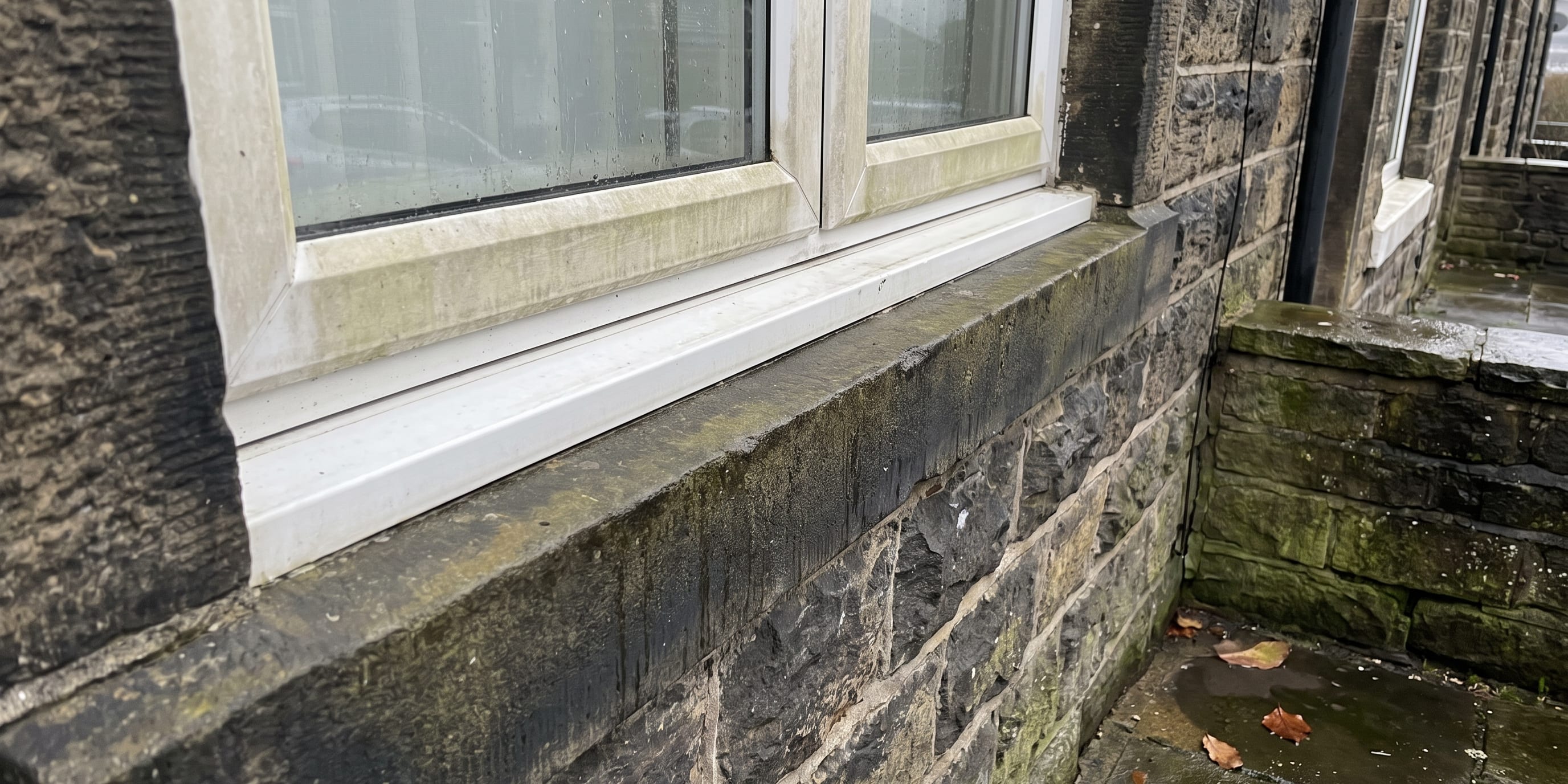
Wooden Window Sills Rotting: Should You Repair or Replace?
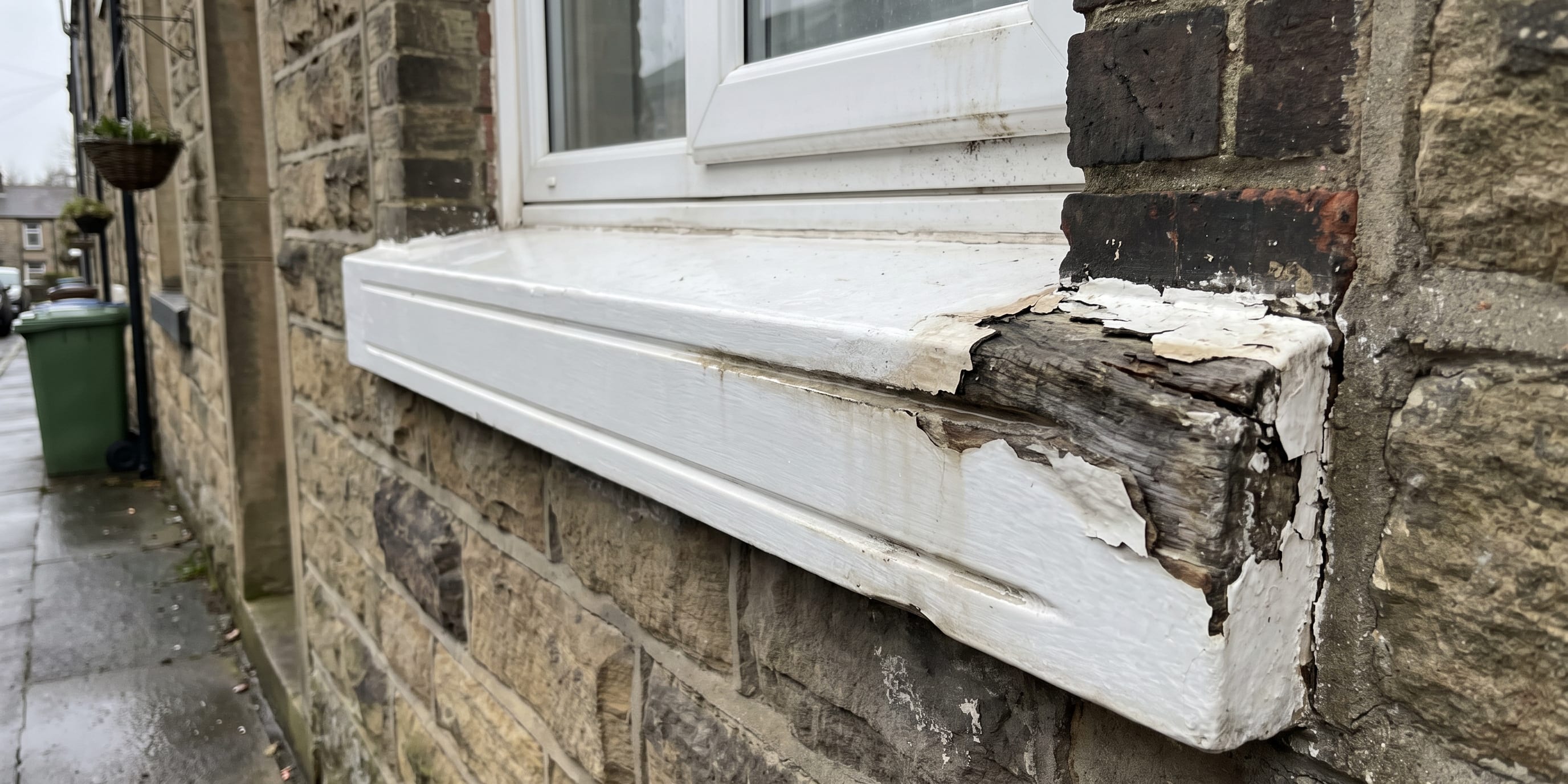
Rotting timber sills are one of those jobs that homeowners put off for years. A bit of flaking paint here, a soft patch there, and then one autumn you push a thumbnail into the front edge of the sill and it goes straight in. At that point you have a decision to make, and the honest answer is that it depends far more on your property than on the sill itself.
Most articles on this subject push restoration, because they are written by people who do restoration. This one takes a different line. There are situations where repairing a timber sill is absolutely the right call, and we will be clear about when that is. There are also situations where repeated repair is throwing good money after bad, and replacing the window outright makes more sense. We should say plainly up front that Win-Door Fit does not repair or restore timber, and does not fit timber windows. We install uPVC. If your property needs like-for-like timber, we will tell you so and point you elsewhere rather than sell you something unsuitable.
Why wooden window sills rot in the first place
Timber rots when its moisture content stays high for long enough that fungal decay can take hold. The sill is the most vulnerable part of any timber window because it is horizontal, it is the lowest point, and it catches everything that runs down the glass.
Three things usually combine. The first is the paint film. Paint on exterior joinery is a sacrificial layer, and once it cracks, water gets behind it and then cannot evaporate out again. The paint that was supposed to protect the timber starts trapping moisture against it instead. The second is end grain. The cut ends of the sill, where it meets the jambs or disappears into the reveal, soak up water far faster than the face of the timber. That is why rot so often starts at the corners where you cannot see it. The third is detailing that has stopped working: a drip groove clogged with old paint, a failed mastic joint between sill and brickwork, or a window that no longer throws water clear of the wall.
Exposure matters too. South west elevations in the UK take the brunt of driving rain. A north facing sill that stays damp and never properly dries out can fare just as badly for different reasons. If one sill on your house has gone and the others look fine, exposure is usually the explanation.
The real cost of repeated repair
A single sill repair is not expensive compared with a new window. That is the argument every restoration page makes, and in isolation it is true. The problem is that a sill repair is rarely a single event.
Think about what the full cycle actually involves. The decayed section is cut out and new timber spliced in, or the void is filled with a two-part epoxy system. The repair is primed, undercoated and topcoated. Then, to keep it sound, the whole window needs repainting on a regular cycle, because the repair is only as good as the coating protecting it. Exterior timber in an exposed position needs attention every few years, and that is before you count the cost of access equipment on a first floor window.
So the number to weigh is not the quoted repair cost on its own. It is that repair cost plus every redecoration cycle that follows it, plus whatever the next failure costs when water finds the same route back in. Over a twenty or thirty year horizon, that is a repeating bill with no end point, plus the time and hassle of organising it. A replacement window is a one-off cost. Whether the maths favours repair or replacement depends on how many windows you have, how bad they are, and how long you plan to stay. But the honest comparison is not "one repair versus one window". It is "a maintenance cycle that never stops versus a single piece of work".
There is a second cost that rarely gets mentioned: the rest of the window. If the sills are going, the frames are usually not far behind, and older timber windows frequently come with single glazing or failed early double glazed units. Spending repeatedly on sills attached to a window that is failing thermally is money spent on the wrong part of the problem.
When replacement is the sensible choice
Replacement tends to make sense when several of these apply to your home.
The property is not listed and not in a conservation area. This is the big one. Without a planning constraint, you are free to choose on merit.
The rot keeps coming back. If a sill has already been repaired once and has failed again in the same place, the underlying cause has not been addressed. Water is getting in somewhere the repair did not reach, and the next repair will go the same way.
More than one window is affected. Rot on a single sill is a repair job. Rot across four or five windows of the same age is a sign that the whole set has reached the end of its serviceable life.
The maintenance burden is the problem. Some people genuinely enjoy maintaining timber joinery. Many do not, and for an elderly homeowner or anyone without the time for a painting cycle, a window that never needs painting is worth a great deal.
The windows are failing in other ways. Draughts, misted units, stiff or failed hardware, and poor thermal performance all point the same direction.
When repair is still the right answer
If your home is listed, or sits within a conservation area with an Article 4 direction covering windows, repair is very likely the correct and the legally required route. Local planning authorities in these cases normally expect like-for-like timber, matching profiles, sightlines and glazing bars. Swapping to uPVC can result in enforcement action requiring you to put it back, which is an expensive way to learn the rule.
Repair is also right where the timber is genuinely good quality and only locally affected. Older windows are often made from slow grown, dense softwood or hardwood that is better material than much of what is available today. If the frames are sound and only the front edge of one sill has gone, splicing in new timber is proportionate work.
Finally, repair is the right answer if you want timber. Plenty of people love the look and the feel of painted joinery and accept the upkeep that comes with it. That is a legitimate choice, and it is not one we are going to argue you out of. It does mean we are not the right company for the job, and we would rather say so at the enquiry stage than waste your time on a survey.
What a uPVC replacement actually involves
A sill repair is carpentry. The decayed timber is cut back to sound material, new timber is scarfed in or resin is applied, and the whole thing is made good and redecorated. It is skilled work, done in situ, and the window stays where it is.
A replacement is a different operation. The existing window is removed, the opening is checked and made good where necessary, and a new frame is fitted, packed, fixed and sealed, with a new uPVC cill beneath it that throws water clear of the wall. Internal reveals are made good and trimmed. Glazed units are installed and the hardware adjusted so the sashes close evenly on their seals. Typical windows are done in a day, with larger jobs running over several days.
Our fitting is based around replacement windows on the REHAU system, chosen for the profile quality and the range of finishes, including woodgrain foils for anyone who wants to keep a timber appearance without the painting cycle.
Why FENSA and a ten year guarantee matter here
This is a real difference between the two routes and it is worth understanding before you compare quotes.
Replacement windows are notifiable work under Building Regulations. A FENSA registered installer self-certifies that the work complies and notifies the local authority, so you receive a certificate for your records. That certificate matters when you sell: conveyancing solicitors ask for it, and its absence can delay a sale or trigger a retrospective indemnity policy.
The second piece is an insurance-backed guarantee. A ten year insurance-backed guarantee protects the workmanship cover even if the installing company ceases trading during that period. A company guarantee alone is only as durable as the company. Timber repairs, by contrast, usually come with a short workmanship warranty and nothing more, because the longevity depends heavily on how the paintwork is maintained afterwards, which is outside the joiner’s control.
When you are weighing a repair quote against a replacement quote, compare what is actually being promised and for how long, not just the headline figure.
Working out which camp you are in
Start with the planning question, because it settles everything else. Check whether your property is listed and whether it falls within a conservation area, and if in doubt ask your local planning authority before anything else. If there is a constraint, your route is repair and you need a joiner experienced in heritage joinery.
If there is no constraint, probe the timber properly. Test every sill, not just the obvious one, and test the frame above it too. Localised rot on otherwise sound windows is a repair. Widespread softness, repeat failures, or rot combined with draughts and misted glass points firmly towards replacement.
If you land on replacement and want a straight assessment with no pressure, get in touch with Win-Door Fit and we will look at what you have got and tell you honestly whether we are the right people for it.
Questions
Frequently Asked Questions
How can I tell if my wooden window sill is rotten or just weathered?
Press a screwdriver or bradawl into the timber, particularly at the ends and along the front edge. Sound timber resists. Rotten timber feels spongy and the tool sinks in with little pressure. Dark staining, flaking paint and soft patches under the paint film are all warning signs.
Can a rotten window sill be repaired without replacing the whole window?
Often yes. A joiner can cut out the decayed section and splice in new timber, or use a two-part epoxy resin system for smaller areas. This works well where the rot is localised and the rest of the frame is sound. Where the rot has travelled into the frame itself, repair becomes far less worthwhile.
Do uPVC windows still have a sill?
Yes. A uPVC replacement window is normally fitted with an integral uPVC cill that sits beneath the frame and throws water clear of the wall below. It does not need painting and will not rot, which is the main reason homeowners move away from timber.
Does my home need planning permission to swap timber windows for uPVC?
Most non-listed homes outside conservation areas do not, as replacement windows usually fall under permitted development. Listed buildings and properties in conservation areas are a different matter and you should speak to your local planning authority before committing to anything.
Why does FENSA registration matter when replacing windows?
A FENSA registered installer self-certifies that the work meets Building Regulations and notifies your local authority on your behalf, so you receive a certificate. Without it you would need to arrange a building control application separately, and the paperwork can surface awkwardly when you come to sell.