
Why Do Windows Whistle in the Wind, and What It Means
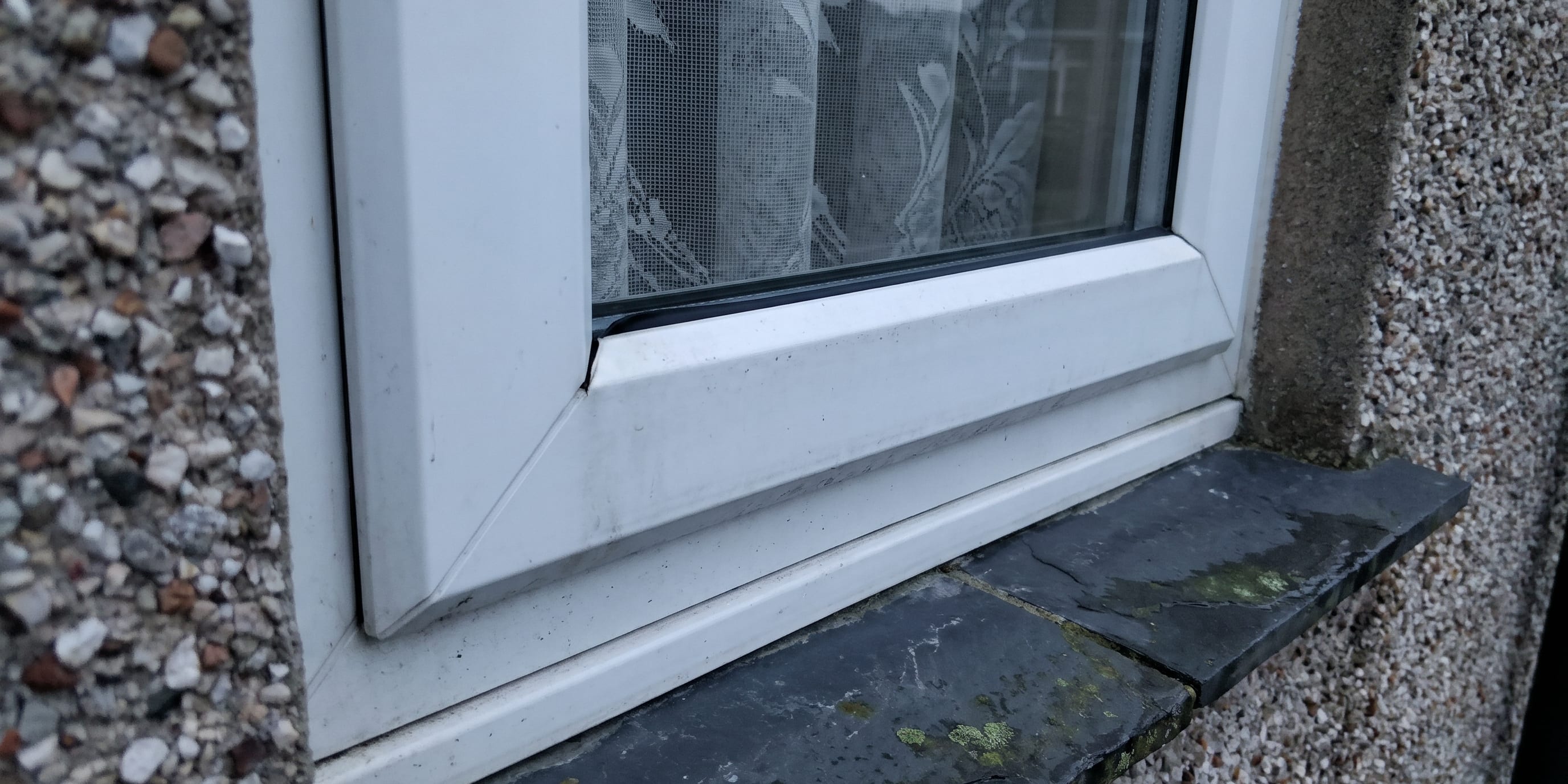
There is a particular sound that only turns up when the weather does. A thin, reedy note somewhere behind the curtains, rising and falling with the gusts, loud enough at two in the morning to make you lie there wondering whether it is the window, the loft or next door’s fence panel.
If your windows whistle when it’s windy, the noise is telling you something useful. Air is being forced through a gap that is narrower than the volume of air trying to get through it. That is all a whistle is: pressurised air squeezing past a restriction. The question worth answering is not how to muffle it but what has opened up that gap, because the answer ranges from a ten minute adjustment to a frame that has reached the end of its working life.
What actually makes a uPVC window whistle
Perished gaskets
Every uPVC window has a flexible rubber or synthetic gasket running round the sash, and usually a second one bedding the glass into the frame. New, that gasket is soft and springy, and when you close the window it compresses into a continuous seal.
Over years of UV, frost and heat cycling, the material hardens. It loses its memory, so instead of springing back it stays flattened in the shape it was last left in. Now there are tiny channels where the rubber no longer makes contact, especially at corners where the gasket has shrunk back from the mitre. Push wind against that and you get a whistle.
This is the single most common cause we see described, and it is also the most reassuring one, because gaskets are a wearing part. Replacing them does not require replacing the window.
Failed perimeter sealant
The joint between the window frame and the brickwork or render is sealed with a bead of silicone or a similar mastic. It is doing a hard job: holding a weatherproof line across two materials that expand and contract at different rates.
When that bead goes, it rarely vanishes. It splits hairline-fine along its length, or it loses adhesion on one side and lifts away from the brick while still looking intact from a distance. Wind driven against the elevation finds the split, travels behind the frame and emerges somewhere inside the reveal. The whistle can appear to come from the window while actually originating a few inches outside it.
A dropped or warped sash
Opening sashes hang on hinges, and hinges carry weight. Over a long service life, particularly on wide casements or anything with a heavy sealed unit, the sash can settle a few millimetres out of square. The handle still turns, the window still locks, but the compression on the seal is now uneven: tight at the top, slack at the bottom corner.
Separately, uPVC itself can distort. Profiles on a south facing elevation take years of thermal movement, and an older frame without adequate internal reinforcement can bow. A bowed frame and a straight sash will never seal across their full length.
Hardware that is no longer pulling the sash home
The locking mechanism on a modern casement does not simply latch. It pulls the sash tight against the gasket at several points round the frame. If a keep (the metal plate the lock engages with) has worked loose, or a cam has worn, the sash closes but stops short of full compression. You often notice this as a window that feels easier to close than it used to.
Trickle vents
Many windows have a slotted vent in the head of the frame. It is meant to pass air, so it will never be silent, but it should not sing. A vent whistles when the internal baffle is damaged, when the flap no longer sits flat, or when years of dust and insect debris have part-blocked the slot and turned a wide opening into a narrow one. Narrowing the gap is exactly how you create a whistle.
Why the age and the original fit matter so much
Two windows of the same age in the same house can behave completely differently, and the reason is usually how they went in.
A frame that was packed and fixed correctly sits square, carries its load through the packers rather than through the fixings, and keeps its geometry for decades. A frame that was fitted with too few fixings, inadequate packing or an oversized gap stuffed with expanding foam will move. Not quickly, but steadily. A badly fitted or ageing frame will keep coming back to the same fault in the same corner no matter how many times somebody re-seals it, because the sealant is being asked to bridge a joint that is still working.
This is why a repair history matters more than the symptom. One whistle in one window after fifteen years is wear. The same window whistling again a year after it was sealed is a structural message.
Age also stacks the causes. A twenty year old window is likely to have hardened gaskets and tired sealant and some hinge settlement at once. Fixing one of the three leaves you with a quieter window that still is not weathertight, which is how people end up feeling that repairs never quite work.
What you can safely check yourself
None of the following will void a guarantee or compromise ventilation, and all of it is worth doing before anyone quotes you for anything.
Find the gap with a candle or an incense stick. On a breezy day, move a small flame slowly round the inside perimeter of the window, an inch or two from the frame. Where it bends, you have your leak. Do the opening sash first, then the fixed glass, then the junction between frame and wall. Keep the flame away from curtains.
Run a hand round the gasket. It should feel soft and give slightly under a fingertip. If it feels like hard plastic, is shiny, or has pulled back from the corners leaving visible gaps, it is spent.
Look at the outside sealant in daylight. Stand close. You are looking for splits, chalky crumbling, or a bead that has come away from the masonry on one edge. A bead that has lifted is as bad as one that has gone.
Check the sash sits evenly. Close the window and look at the gap between sash and frame all the way round. It should be parallel. A gap that tapers tells you the sash has dropped.
Clean, do not block, the trickle vent. Open it, brush out the slot, check the flap moves freely. If it is damaged, it should be replaced, not taped over. Sealing a vent is how you move a draught problem into the bathroom ceiling as a mould problem.
Test the handle. Does it meet firm resistance as it reaches the locked position? If it swings freely to the stop, the hardware is not pulling the sash in.
What we would not suggest doing yourself is forcing hinge adjusters, adding draught strip inside the gasket channel, or running fresh silicone over old failed silicone. All three tend to mask the diagnosis rather than fix it.
When whistling means the window itself has failed
Draw the line here. These are the signs that re-sealing becomes a false economy:
- The same gap returns within a year of being repaired. The frame is moving. Sealant cannot hold a joint that is still flexing.
- Visible misting or water between the panes. The sealed unit has lost its seal. Noise and failed glazing often arrive together because both come down to perimeter seals reaching the end of their life.
- The frame does not look straight. Sight along it. Bow or twist in the profile cannot be adjusted out.
- Rot or crumbling in the reveal. If water has been getting behind the frame long enough to damage the structure around it, the fix is not cosmetic.
- Multiple windows, same elevation, same symptom. That is an ageing installation, not an isolated fault, and repairing them one at a time usually costs more over five years than replacing the set.
- The hardware is obsolete. Some older systems no longer have available replacement gaskets or locking gear. At that point a repair cannot be done properly even if it is technically the right answer.
If you are weighing up the middle ground, where the frames are sound but the glass and seals are tired, it is worth reading about double glazing upgrades before committing to full replacement. Not every tired window needs the whole thing taken out.
How we quote on this
We do not price work over the phone. A whistling window can be a five minute hinge adjustment or evidence of a frame that has been admitting water for years, and nobody can tell the difference from a description.
What happens instead is a home visit. We look at the frame, the sash, the gaskets, the hardware and the junction with the masonry, inside and out. We measure. We tell you honestly whether what you have in front of you is a repair or a replacement, including when the answer is that you do not need us yet. Then you get one written price, in full, with no revisions after the fact and no pressure to decide on the doorstep.
Where replacement genuinely is the right call, our replacement windows on the REHAU system are specified to seal properly from the first winter and keep doing it, which is the only real test of any window. If you would rather have a straight answer than another year of guessing at that noise, book a home visit and we will tell you exactly what we find.
Questions
Frequently Asked Questions
Is a whistling window always a sign it needs replacing?
No. A large share of whistling comes from perished rubber gaskets or a sash that has dropped slightly on its hinges, and both can be put right without new windows. Whistling only points to replacement when the frame itself has moved, the sealed unit has failed, or repairs keep undoing themselves in the same spot.
Can I just fill the gap with silicone or draught strip?
Externally applied silicone over a moving joint tends to split within a season, and draught strip pressed into a gasket channel can stop the sash closing properly against its locking points. Both are better treated as short term measures while you work out what is actually causing the noise.
Should I block the trickle vent to stop the whistle?
Trickle vents are there to manage condensation and indoor air quality, so sealing one permanently trades a noise problem for a damp problem. If a vent whistles, clean it, check the flap moves freely, and have the vent itself replaced if the baffle is damaged.
Does Win-Door Fit give quotes over the phone?
No. We visit, measure, look at the frames and the surrounding reveal, then issue one written price. A whistling window can be a five minute adjustment or a sign of a failed frame, and nobody can tell which from a description down the phone.
Why do the windows on one side of the house whistle and the others don’t?
Prevailing wind is usually the reason. The elevation that takes the weather gets more driven rain, more UV on the south face and more pressure against the seals, so gaskets and sealant on that side age faster than on the sheltered side of the same house.