
Kitchen Window Over the Sink Hard to Reach? Real Fixes
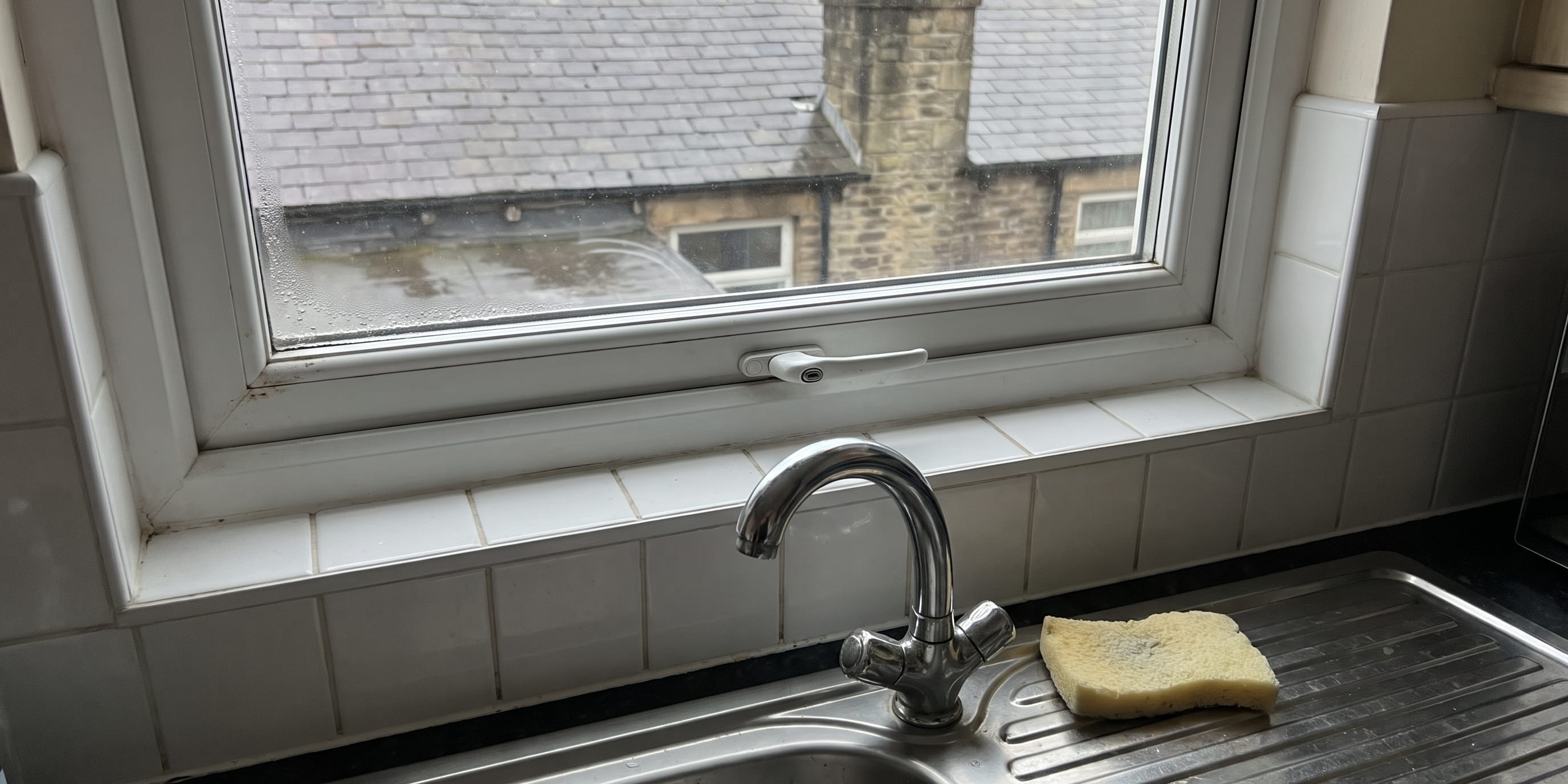
Struggling to Reach Your Kitchen Window Over the Sink? Here’s What Actually Fixes It
It is one of the most common complaints about kitchens and one of the least talked about when people shop for windows. The window above the sink looks perfectly normal. It opens. It closes. But to actually use it you have to lean across a wet draining board, stretch past the tap, find the handle with your fingertips and then shove the sash outwards with the back of your hand. Plenty of people give up and stop opening it, which is a problem in the room that generates the most steam in the house.
This is solvable, and it is almost always solved at specification stage. The catch is that a lot of replacement windows get quoted like for like, which means an awkward window gets replaced with a brand new awkward window.
Why a standard casement over a sink becomes hard to reach
A side hung or top hung casement is the default window across most of the UK, and for most rooms it is the right choice. Above a sink, three things conspire against it.
Handle position. On a side hung casement the handle sits on the opening edge of the sash, which is the far side from the hinge. Depending on which way the window is hung, that can put the handle at the furthest point from where you stand. On a top hung casement the handle sits along the bottom rail, which is better, but it is still at the back of the sill.
Sill depth. A modern window sits in a wall that may be 300mm thick or more once you account for cavity construction, insulation and internal plaster, and the frame usually sits towards the outer face of that wall. Every millimetre of internal sill between you and the frame is reach you have to find from a standing position.
Worktop overhang. This is the one people forget. A standard kitchen worktop is around 600mm deep and overhangs the unit fronts at the front edge. You cannot step in close to the wall because the worktop stops your legs well short. Add a sink bowl, a mixer tap and a drainer and your body is held back further still. You end up reaching from the hips, which is uncomfortable and unstable.
Stack all three and the handle can sit well beyond comfortable reach, even for someone tall. For anyone shorter, anyone with shoulder trouble, or anyone who does not fancy leaning over a sink full of water, it becomes a window that is technically openable and practically never opened.
Tilt and turn: the most direct fix
If reach is the main complaint, tilt and turn is usually the first thing worth discussing.
One handle controls two functions. Turn it horizontal and the whole sash swings inwards on side hinges like a door. Turn it vertical and the sash tilts inwards from the top, hinged along the bottom, opening a gap of a few inches at the head.
For a kitchen sink window, tilt mode is the one that matters. You turn the handle once and the window opens itself inwards. There is no pushing, no reaching past the frame, no leaning out over the bowl. The handle on a tilt and turn also sits on the inward face of the sash rather than at the back of a sill, so it is closer to you to begin with.
A tilt opening is naturally secure, because the gap is at the top while the sash stays held on its hinges along the bottom and sides. It sheds rain reasonably well. And because warm, moist air rises, an opening at the top of the window is the right place for steam to escape.
One practical point. The full turn function swings the entire sash into the room, so the worktop needs to be clear of kettles and utensil pots when you want to clean the outside of the glass. If your worktop is permanently loaded, say so at survey and your installer can discuss whether a tilt only configuration suits you better.
Extended handles and restrictor stays
Not every kitchen needs a change of opening style. Sometimes the geometry is only slightly against you and the hardware closes the gap.
Extended and cranked handles. Standard espagnolette handles have a short spindle and a compact lever. Longer reach and cranked versions put the lever closer to you or at a different angle, and on some systems they gain a useful amount of reach. They have to be matched to the gearbox and backset of the window, which is why it is far easier to specify them with a new installation than to retrofit one later and hope the spindle length works. If you are replacing an older window with a cockspur handle, you are also moving to a lighter, more positive lever action, which matters when you are operating it at arm’s length with one hand.
Restrictor and friction stays. A friction stay is the hinge mechanism that holds a casement sash at whatever angle you leave it. A good one means the window stays put instead of swinging shut or flying open in a gust, which removes the need to lean out and grab it. Restrictors go further and limit the opening to a set distance. Over a sink that is often exactly what you want: a controlled gap for airflow, no wrestling, and a useful safety feature if there are children in the house. Egress hinges are a related option where the window also has to serve as a fire escape, and your installer will tell you if that applies.
None of this hardware is exotic. It is a conversation at quote stage about which handle and which stay suit the position.
Vertical sliding sash and flush sash alternatives
Two other styles are worth putting on the table.
Vertical sliding sash. A sash window opens by sliding the bottom pane upwards, so nothing ever projects outwards and you never have to push a sash away from you. The operating point is the bottom rail, the nearest part of the window to where you stand. For a tight kitchen where the worktop holds you back, that geometry genuinely helps. Modern PVCu sashes also tilt inwards for cleaning. The trade off is that lifting a sash needs some upward force, so the balance mechanism has to be right for the weight of the glass.
Flush sash casements. A flush casement sits level with the outer face of the frame rather than overlapping it. That does not move the handle on its own, but the slimmer profile can allow a slightly larger opening sash within the same hole and gives a cleaner internal reveal, so there is marginally less obstruction between you and the handle. A small gain rather than a transformation, but in a kitchen where every inch counts, small gains stack.
Neither of these beats tilt and turn purely on reach. They are worth considering when the look of the house matters, or when tilt and turn does not suit the room for other reasons.
Trickle vents and tilt only ventilation
A lot of the time you are not trying to open the window. You are trying to get rid of steam.
Trickle vents are small controllable vents fitted into the head of the frame or the top of the sash, providing continuous background ventilation with the window shut. Crucially for this topic, the control slider sits at the top of the window, at or near head height, rather than at the back of the sill. You can reach it standing up without leaning anywhere.
That changes the daily routine. Background ventilation handles the ordinary moisture load: washing up, the dishwasher cycle, the general dampness of a busy room. You then only need to open the window properly when you are boiling pans. Current building regulations often require trickle vents when replacing windows in any case, so this is frequently not optional. Pair them with a tilt function or a restricted opening and you have a window that does its job without ever demanding a stretch. They are not a substitute for a working extractor over the hob; they work alongside it.
What to tell your installer before the survey
This is the part that decides whether the problem gets fixed or repeated. A surveyor measuring for a like for like replacement will quote a like for like window unless you say otherwise. Before the survey, be ready to say:
- That reach is a problem. In plain terms: "I cannot comfortably reach the handle on the kitchen window." It immediately changes what gets specified.
- What is in the way. Worktop depth, sink and drainer position, tap height, and any shelf or blind that stays put.
- Who uses it. If the main user is shorter than average, has limited shoulder movement or struggles with grip, the right handle and opening style will differ.
- Which side you stand on. For a side hung casement the hinge side determines where the handle ends up. Standing to the left of the sink is a different problem from standing to the right.
- Whether the worktop can be cleared. This decides whether a full tilt and turn is practical or whether a restricted or tilt only setup makes more sense.
- Whether the window is a fire escape. If the kitchen is the designated escape route for that part of the house, that constrains the opening style, and your installer needs to know early.
Ask the surveyor to stand where you stand and reach for where the handle would be. It takes ten seconds and it settles the argument.
The reach problem over a kitchen sink is a design problem, not a defect. It happens because windows get chosen for how they look from the street and replaced on the measurements of whatever was there before. Once you raise it, the fixes are straightforward. If your kitchen window has quietly become one you never open, have someone look at the opening before anything is ordered. You can read more about our replacement windows on the REHAU system and the opening styles available, then raise the reach issue at survey so it is designed out from the start.
Questions
Frequently Asked Questions
Can I just fit a longer handle to my existing kitchen window?
Sometimes. If the window is sound and the only problem is the last few inches, an extended or cranked handle matched to the existing gearbox can close the gap. It will not help if the real issue is leaning over a deep worktop, because you still have to push the sash outwards by hand.
Are tilt and turn windows a good idea above a kitchen sink?
They tend to work very well. In tilt mode the top of the sash leans inwards a few inches, so you get ventilation by turning the handle once with no reaching or pushing. The full turn function is still there for cleaning, though the worktop needs to be clear for the sash to swing in.
Will a window restrictor make the reach problem worse?
No, it usually helps. A friction stay or restrictor holds the sash where you leave it, so you do not have to lean out to grab it back from the wind. It limits how far the window opens, which is often all you want over a sink anyway.
Do trickle vents remove the need to open the window at all?
Not entirely, but they take the pressure off. Trickle vents give background ventilation at head height with no reaching, which handles everyday moisture. You will still want to open up for heavy steam from boiling pans.
What should I measure before the survey?
Note the worktop depth, the sill depth, and whether a tap, drainer or shelf is in the way. Also note your own comfortable reach. The surveyor takes their own measurements, but knowing the obstacles shapes the conversation.