
Why Your Front Door Lets Cold In Even When It’s Locked
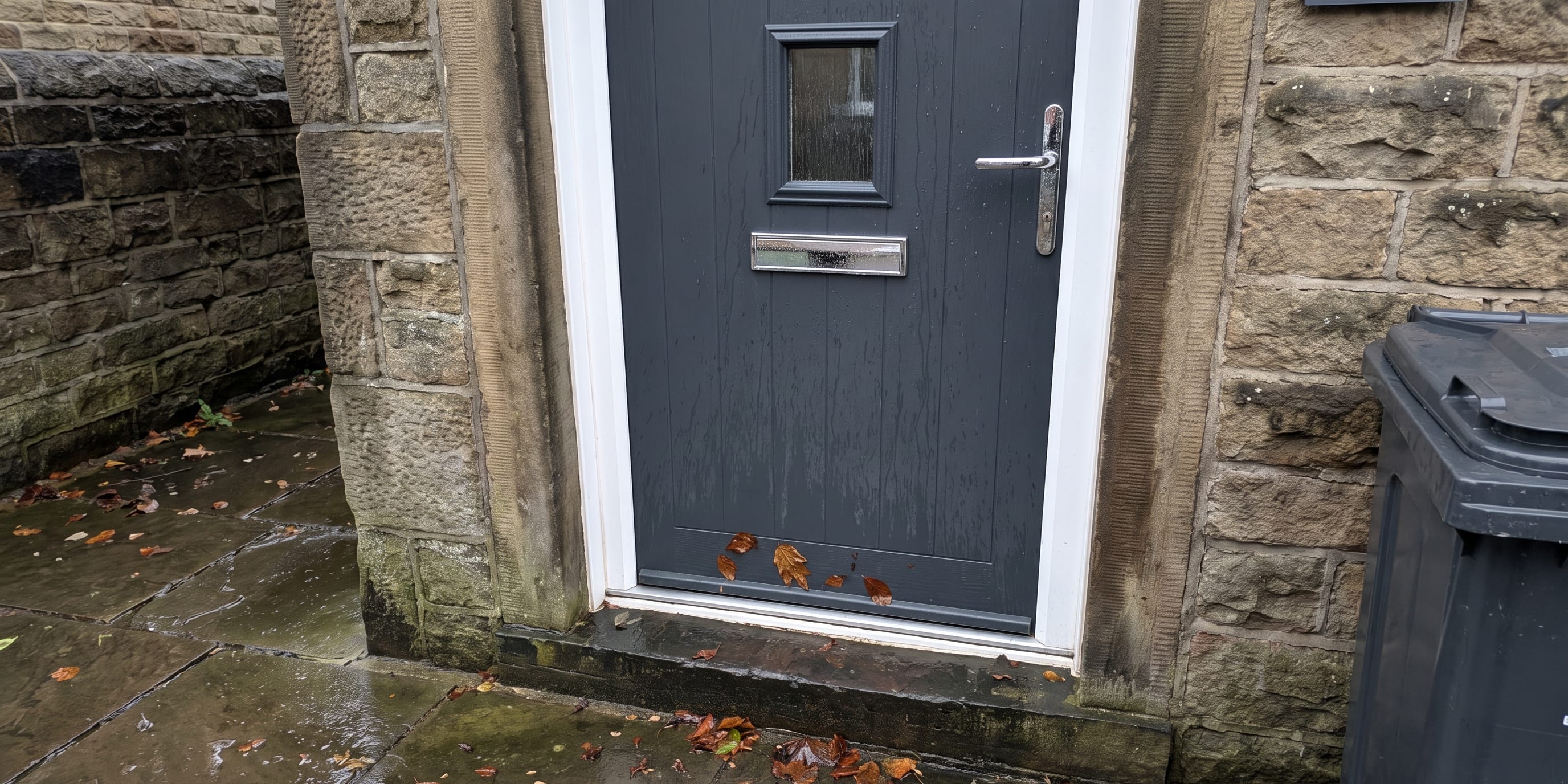
There is a particular kind of cold that makes no sense. The door is shut. You have turned the handle up and thrown the key, every bolt has engaged, and you can hear the lock has done its job properly. Yet stand in the hallway on a windy evening and you can still feel air moving across your ankles. Put a hand near the edge of the door and there it is again.
It is a common thing to find, and it is almost never a problem with the lock. If your front door lets the cold in even when it’s locked, the lock is doing exactly what it was designed to do. It is the sealing that has stopped working, and those are two different functions that happen to share the same door.
Locking and sealing are not the same job
A multi-point lock exists to hold the door shut against force. When you lift the handle, hooks, rollers or deadbolts shoot into keeps set into the frame, usually three or five of them down the lock side. Their job is to resist someone pushing, levering or kicking at the door. They do that by gripping at specific points.
Sealing is a different mechanism entirely. Round the inside of the frame runs a rubber gasket, and when the door closes, that gasket is squashed flat by the back of the door leaf. Air cannot pass because the rubber is under continuous compression along every inch of the perimeter, including the hinge side and the head of the frame, where no locking point exists at all.
So a door can lock faultlessly and still leak. The bolts pull the leaf tight where they bite, and between those points the gap opens back up. On the hinge side there are no bolts pulling anything anywhere, which is why so many draughts are felt on the hinge edge of a door that locks perfectly on the handle side.
Once you separate those two functions, the question changes. It is no longer "why won’t my door lock properly". It is "why has the seal stopped making contact", and that has a small number of likely answers.
Reading your own door: what to actually look for
You can get most of the way to a diagnosis yourself on a bright day with ten minutes to spare.
Close the door and look for daylight. Shut it, lock it, then stand inside with the hall light off. Run your eye slowly round the whole perimeter. Any thread of daylight, however fine, is a direct path for air. Note where it appears, because the location tells you a great deal. Light at the top corner on the handle side, widening as it goes up, is the classic signature of a dropped door.
Press the seals with a finger. Open the door and find the rubber gasket in the frame. It should feel springy and push back. If it is squashed permanently flat, has gone hard and shiny, is cracking, or has pulled out of its channel in places, it has stopped doing its job. Rubber perishes. It is a consumable part, not a permanent one, and after enough years of being compressed every time the door shuts, it stays compressed.
Check whether the door has dropped. Hinges carry a lot of weight for a very long time, and over the years the leaf can sag away from the frame at the top. Look at the gap between the door and the frame all the way down the hinge side. On a square door that gap is even top to bottom. If it narrows at the bottom and widens at the top, or if the door catches on the threshold as it closes, the hinges have given and the leaf is no longer sitting flat against the seal.
Try the paper test. Close a sheet of paper in the door at several points round the frame, then try to pull it out. Where it slides out with no resistance, the seal is not gripping there. Where it tears or holds firm, the compression is still good. Doing this at the top, middle and bottom of both sides maps out exactly where you are losing air.
Signs the door itself is finished
The checks above tell you where the leak is. A separate set of signs tells you whether the door has anything left to give.
Chalking and discolouration. Older uPVC that has lost its surface will feel powdery to the touch, and a cloth wiped across it comes away white. That is the material breaking down under years of ultraviolet light. It is not a cleaning problem and it does not come back with a wash.
Warping or bowing in the leaf. Sight down the face of a closed door from the edge, the way you would check a piece of timber. A leaf that has bowed will never again make even contact with the frame, because the middle and the edges are sitting on different planes. No amount of hinge adjustment corrects a bend in the slab itself.
Condensation between the glazing. If the door has a glazed panel and you can see misting or water droplets trapped between the panes, the sealed unit has failed. The seal round the edge of that unit has given way and moisture has got inside. That is a reliable sign of age, and on an older door it rarely arrives alone.
A gap that keeps coming back. If the door has been adjusted once already and the draught returned within a season, the frame or the leaf is moving. Adjustment buys you time on a sound door. On a tired one it buys you weeks.
Where the line sits between a fix and a replacement
It is worth being straight about this, because not every draughty front door needs replacing and nobody should be told otherwise.
If the leaf is straight, the frame is solid and square, the hinges are sound and the only real problem is a flattened gasket, then a new weatherstrip is the right answer. Likewise, a door that has dropped slightly but is otherwise in good order can usually be brought back into alignment by adjusting the hinges, which on most uPVC and composite doors is a matter of turning the adjustment screws to lift and shift the leaf until the gaps are even again. Both of these are proper repairs on a door with years left in it.
The line sits where the problem stops being a component and starts being the door. A bowed leaf, a frame that has gone brittle, failed glazing, hinge fixings that no longer hold because the material round them has degraded, or a door that will not stay in adjustment: these are not parts you can swap out. At that point you are maintaining something that has reached the end of its working life, and every repair is holding back the next one for a shorter time than the last.
What a new door does differently
The improvement in a new door is mostly about the seal being continuous and the geometry being right from the start.
A new composite door from Win-Door Fit is fitted into a REHAU frame with a compression gasket that runs unbroken round the full perimeter, so the hinge side and the head are sealed as firmly as the lock side. The hinges are set and adjusted at installation so the leaf meets that gasket squarely, with even pressure all the way round rather than tight in three places and loose everywhere else. The frames are built to the security standards set out in Document Q of the Building Regulations, which covers the resistance of doorsets in new dwellings and sets a benchmark worth asking any installer about.
A composite slab is also solid through its thickness, with an insulating core, so the door is not simply sealing better at the edges. The panel itself is carrying far less heat out of the hallway than an older, thinner one.
What happens if replacement is the answer
The process is deliberately simple, and it starts with somebody looking at the opening.
A home visit comes first. Door openings differ in size, square and condition, and the state of the existing frame and reveal affects what the job actually involves. That visit produces a single written price covering the work described. There is no second figure that appears later, and no price given over the phone, because a phone quote on a door nobody has seen is a guess dressed up as a number.
Completed work is registered with FENSA, which is the self-certification scheme confirming the installation complies with the relevant Building Regulations and gives you the certificate you will want when you come to sell. The installation carries a ten year insurance-backed guarantee, which means the cover sits with an insurer rather than resting solely on the company that did the work.
If you have worked through the checks above and the answer points at the door rather than the lock, the next step is to have the opening looked at properly. You can see the full range, the specification and how the process works at Win-Door Fit’s composite front doors, and arrange a home visit from there.
Questions
Frequently Asked Questions
If my door locks properly, why does it still feel cold around the edges?
Locking and sealing are two separate jobs. The multi-point lock pulls the door tight at the points where the hooks and rollers sit, usually along the lock side only. Sealing depends on a continuous rubber gasket being compressed evenly all the way round the frame. If that gasket has flattened or the door has dropped on its hinges, air moves through the gaps between the locking points even though every bolt has engaged.
Can a draughty front door be fixed without replacing it?
Often, yes. A door that has dropped slightly can usually be brought back into line by adjusting the hinges, and a perished weatherstrip can be replaced if the gasket channel in the frame is still sound. Adjustment and new seals are worth trying first where the door leaf itself is straight and the frame is solid.
How do I know whether the door itself has failed?
Look for problems the lock cannot cause. A bowed or warped leaf, a frame that has gone chalky and brittle, condensation sitting between the panes of the door glazing, or a gap that reopens within weeks of being adjusted all point at the door rather than the hardware.
Does a new composite door actually stop draughts, or does it just look better?
A new door is sealed by a continuous compression gasket running round the whole frame, with hinges set and aligned from new so the leaf closes squarely against it. The difference you feel is less to do with the slab material and more to do with the seal being unbroken and under even pressure.
Can I get a price over the phone?
No. Door openings vary in size, square and condition, and a price given without seeing the opening is a guess. A home visit produces one written price that covers the work described, with no second figure later.