
Condensation Between Double Glazing Panes: What It Means
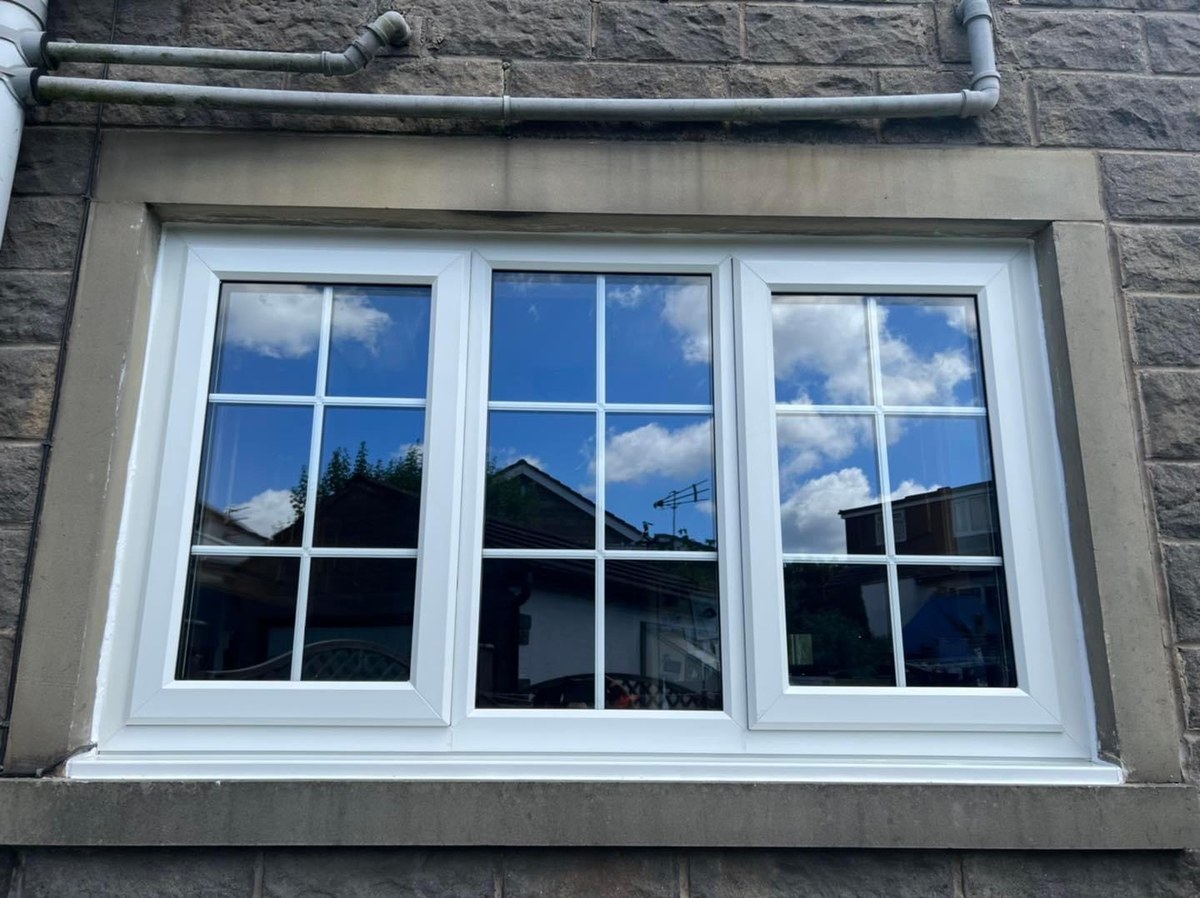
You wipe the window and the mist stays put. Wipe the outside, and it is still there. That greyish bloom, or the tidemark that creeps up from the bottom of the glass on a cold morning, is sitting somewhere you cannot reach: inside the cavity, between the two panes.
It is one of the most common calls we get across Burnley, Nelson, Accrington and the surrounding towns, and it is also one of the most commonly oversold. Plenty of homeowners are quoted for a full set of replacement windows when the frames around the failed glass have years left in them. Condensation between double glazing panes tells you one specific thing has failed, and whether that means new glass or a new window depends entirely on the condition of the frame holding it.
What a sealed unit actually is
A double glazed window is really two separate products. There is the frame (uPVC, timber or aluminium) with its hinges, locks and drainage, and there is the insulated glass unit sitting inside it, held in place by removable beads.
That glass unit is built like a sandwich. Two panes are separated by a spacer bar running around the perimeter, usually aluminium or a warm edge composite, and the gap between them is filled with dry air or, in most modern units, an inert gas such as argon, which conducts heat far less readily than air does.
The spacer bar is not solid. It is hollow, and it is packed with desiccant: moisture absorbing beads doing the same job as the silica gel sachet in a new pair of shoes. They soak up the small amount of moisture trapped in the cavity when the unit was made and keep the space bone dry for as long as it lasts.
Around the outside of the spacer sit two lines of defence. A primary seal, typically polyisobutylene, forms the actual gas and vapour barrier. A secondary sealant, often polysulphide or silicone, bonds the whole assembly together and gives it structural strength. When people say a unit has "blown", that is the shorthand for those seals failing.
What physically happens when the seal goes
Seals fail through years of movement. Every day the cavity warms in the sun and expands, then cools overnight and contracts. That constant pumping action works at the sealant, and where water sits against the edge of the unit, it attacks the bond from the outside in.
Once the barrier is breached, moist outside air is drawn into the cavity as the unit cools. The desiccant absorbs it for a while, but there is a fixed amount in that spacer bar, and once it is saturated it has nothing left to give.
That is the moment you start to see the fog. Water vapour now condenses on the inner faces of the glass whenever the temperature drops below dew point, and the gas fill, if there was one, has long since leaked away and been replaced by ordinary damp air.
So condensation between the panes is not a symptom of a cold snap. It is the visible endpoint of a failure that began some time earlier, and it means both the seal and the desiccant are finished.
The self-check: three kinds of condensation
Before you phone anyone, work out which surface the moisture is actually on. There are only three possibilities.
Room-side condensation, on the inner face of the glass. Wipe it and it comes away on the cloth. This is not a window fault. It is humid indoor air meeting the coldest surface in the room. Drying washing indoors, unvented showers, cooking without an extractor and blocked trickle vents all drive it, and older glazing shows it more because the glass runs colder. If it appears on every window in the house, it is a ventilation and humidity issue, though a modern warm edge unit will reduce it considerably.
Outside condensation, on the external face. Also wipeable, usually a light dew on a clear, still morning. Counterintuitively this is a good sign. It means so little heat is escaping through the glass that the outer pane stays cold enough for dew to form on it. Modern low emissivity units do this and nothing is wrong.
Between the panes. Both surfaces wipe clean and the haze remains. You may also see chalky white streaking, brown tidemarks, or in bad cases droplets running down inside the cavity. This is the failed unit, and it is the only one of the three that needs glass replacing.
Why drilling holes does not fix it
Search around and you will find kits and services that promise to "defog" a blown unit by drilling small holes into the glass or spacer, drying the cavity out and fitting a vent.
It does clear the visible mist, often for a season or two. What it does not do is restore anything that actually failed. The primary seal is still breached, the desiccant is still spent, and any argon fill is gone and cannot be reintroduced through a hole. What you have instead is a deliberately vented cavity that breathes outside air, which means it also breathes in moisture every time the humidity rises.
The practical result is a window that looks better for a while but still performs like a poor double glazed unit, with a cavity that gradually re-dirties and often mists again. Drilling glass also risks cracking a pane and will typically void any remaining manufacturer guarantee. If you want the window to work as insulation again, the unit has to be replaced.
Is your frame worth keeping?
This is the part that decides your cost, and it is the part a phone quote cannot answer. Take a proper look at the frame with the window open.
Squareness and sag. Does the sash close cleanly without lifting or slamming? Are the gaps around it even top to bottom? A frame that has dropped or bowed will stress a new unit and can fail it early.
Welded corners. On uPVC, look at the corner joints inside and out. Clean, tight welds are fine. Gaps, splits or joints you can push a fingernail into mean the frame is coming apart.
Drainage. Find the slotted drainage holes on the outer bottom edge and poke them clear. If water has been standing in the frame because those slots were blocked or never cut properly, that is very often what killed the first sealed unit, and it will kill the next one too unless it is sorted.
Hardware and gaskets. Hinges, handles, locks and rubber seals are all replaceable items. Worn hardware on a sound frame is not a reason to replace the window.
Timber frames. Press a screwdriver gently into the bottom rail and the corners of the sash. Firm timber takes new glass happily. Soft, spongy timber means rot has taken hold in the exact area that carries the weight of the unit.
If the frame passes on those points, the sensible job is a new sealed unit into the existing frame. The beads come off, the old unit comes out, the rebate is cleaned and re-packed, and a made to measure unit goes back in. The frame stays, the plaster and the outside render stay untouched, and the cost is a fraction of a full replacement.
Where it fails, new glass alone is throwing good money after bad. Frames that have dropped out of square, uPVC that has gone brittle and chalky through years of UV exposure, corner welds that have opened up and timber with soft rot in the sills all need replacing outright, as do frames where the original installation left no drainage or no support at the corners. Some very old first generation glazing also has rebates too shallow to take a modern unit at all. There is a point at which replacement is simply the better purchase, and an honest installer will tell you where that point is rather than pretending every job is a glass swap or, equally, that every job needs new frames.
Why East Lancashire homes see this sooner
Seal failure is driven by water and by temperature swing, and this part of the country supplies plenty of both. On the western side of the Pennines, towns like Colne, Rawtenstall and Haslingden get sustained wind driven rain that pushes water into the glazing rebate and keeps it there. Add repeated freeze and thaw through the winter and you have the two conditions that break down secondary sealant fastest.
The housing stock matters as much as the weather. Much of the area is Victorian and Edwardian stone terraced housing, with windows that take the full force of exposure and no overhang above them. A great many of those properties were retrofitted with the first wave of uPVC in the 1980s and 1990s, and those early units were often air filled, with plain aluminium spacers and sealant technology far less durable than what is made today. Unsurprisingly they are reaching the end of their lives now, and those facing south west, where the daily heating and cooling cycle is harshest, usually go first. If several windows on one elevation have misted within a year or two of each other, that is normal. They were installed together and they have weathered together.
Assessment, registration and guarantees
A quote given over the phone for misted glazing is a guess. Nobody can tell whether your frame is sound, whether the drainage is clear, or whether the existing rebate will take a modern unit without standing in front of it.
A proper assessment means someone opens the window, checks the frame condition, measures the sight size and the rebate depth, notes the glass specification you have and what it should be replaced with, clears the drainage and identifies why the unit failed. Obscure and toughened glass have to be recorded accurately, and toughened glass is a legal requirement in critical locations such as low level glazing and glass near doors. You should come away with a written price stating what is being supplied, per window, with the glass specification named, and if a full frame replacement is recommended, the reason should be given in plain terms you can verify yourself.
It also helps to know which rules apply to which job. Replacing the sealed unit only, within your existing frame, is generally not notifiable under Building Regulations, because you are replacing glass rather than a controlled fitting. Your protection there comes from the manufacturer’s guarantee on the unit and the installer’s workmanship.
Replacing the whole window, frame included, is different. That is notifiable work, and it must either be certified by an installer registered with a competent person scheme such as FENSA or signed off by your local authority Building Control. Registered installations are typically also offered with an insurance-backed guarantee, commonly running to ten years, which stands behind the installer’s own warranty if that business ceases trading. Keep the certificate safe, because your solicitor will ask for it when you sell.
Working out your next step
If the mist sits between the panes, the seal has gone and that unit will not recover. The only real question left is whether the frame around it has earned another twenty years of service, and that is answered by looking rather than guessing.
If you would like an honest opinion on which of your windows need glass and which need more than that, take a look at our double glazing upgrades service and get in touch to arrange an inspection with a written price.
Questions
Frequently Asked Questions
Does condensation between double glazing panes mean I need a whole new window?
Not usually. If the frame is square, sound and the hardware still works, the glass alone can be replaced. The sealed unit is a separate component that slides out of the frame once the beads are removed. Only when the frame itself has failed does a full replacement make sense.
Can misted double glazing be repaired by drilling and drying it out?
Drilling vent holes can clear the visible fog for a while, but it does not restore the seal, the desiccant or the gas fill. You end up with a vented cavity that breathes damp outside air, so the thermal performance stays poor and the misting tends to return.
How do I know if the condensation is between the panes or just on the glass?
Wipe the glass on the room side, then check the outer face if you can reach it. If both surfaces are dry and the mist or streaking is still there, it sits inside the cavity and the seal has failed.
Do I need FENSA registration for replacing just the glass?
Replacing only the sealed unit within an existing frame is generally not a notifiable job under Building Regulations, so it does not need registering. Replacing the whole window, frame included, does need to be certified or notified to Building Control.
How long should a new sealed unit last?
A well made unit installed into a sound, properly drained frame should give many years of service. Manufacturers usually back units with their own guarantee, and full window replacements can also carry an insurance-backed guarantee, commonly for ten years.